Mali is a country in Africa. It used not to make the news much. If people heard anything about it, it was usually to do with the surprising number of Malian musicians who have acquired some popularity in the western world - Tinariwen, Afel Bocoum, Toumani Diabaté and so on. The country is also known to some as home of the Dogon people, who have strange folk practices some suggest indicate that they have had past contact with extra terrestrial civilisations. And it also has the town of Timbuktu, sometimes seen as the epitome of places that are far away from anywhere (people who live in Timbuktu probably do not see things like this).
Mali is also very poor but for a while anyway had a reputation as being fairly functional. It was something of a poster child for the idea that representative democracy can work in countries that are very poor and also predominantly Muslim. And the combination of its interesting music and desert location (partly combined in the hip Festival In The Desert) meant that it attracted a fair amount of tourism.
But, sadly, things have gone very wrong for Mali. In the north of the country, largely inhabited by the Touareg people, a separatist revolt sprung into being. Then the separatists were joined by a bunch of Muslim extremists allegedly sympathetic to al-Qaeda. The Islamists are led by one Iyad ag-Ghaly, a shady customer who in the past staged several Touareg particularist revolts in the north of Mali (revolts that typically ended with Mr ag-Ghaly being made a member of Mali's government). He seems now to have switched effortlessly from Touareg separatism to Islamic extremism.
The Islamists largely swallowed up their Touareg separatist allies, establishing a zone in the north where they could apply their particular no-fun variety of Islam. Back in Bamako, Mali's capital, members of the Malian army staged a coup. The coup was ostensibly a protest against the government's weak response to the northern revolt, but its main effect was to paralyse the Malian state and lead to the rebels further expanding their area of control.
These days military regimes are very much out of fashion and foreign intervention (by Mali's neighbours) was threatened to crush the putschists in the capital. That was averted when they agreed to hand over power to an interim president, pending elections, but that still left the rebels in control of the north.
The rebels then proceeded to display their badass no-fun credentials by attacking and destroying the shrines and graves of various Muslim saints in their zone of control. Islamists destroying Muslim shrines might seem strange to western readers, but the rebels seem to be inspired by the kind of austere Islam popular in Saudi Arabia, where shrines and saints are seen as unacceptably pagan and contrary to "real Islam". One might see them as Muslim equivalents of those Calvinists in 16th century Europe who went around smashing up stained glass windows and Catholic religious iconography.
This might have chugged along as one of those conflicts you read about in faraway countries were it not for the fear some people have that if the rebels were to take over Mali they would turn the country into a giant al-Qaeda training camp. Or maybe even if they did not take over the whole country, they would turn the huge zone they control into an al-Qaeda camp larger than metropolitan France. There was also the fear that the rebels might spread Islamic extremism to Mali's neighbours. None of this seemed like an appealing prospect. Mali's west African neighbours started gearing up for intervention at some point in the future, as Mali's own military did not seem to be up to the job of crushing the rebels. The French government also gave the impression that it might be interesting in helping to defeat the rebels, albeit also at some indeterminate point in the future.
That was the situation just a week or two back, but now suddenly France is at war in Mali. Its air force is attacking the rebels in the north of the country and French troops have started arriving in Bamako. This sudden intervention seems to have been triggered by a new rebel advance that made it look like they were about to overrun the south of the country. The French intervention looks like it was almost a panicked response to stop that happening.
The situation now is a bit unclear. Although French aeroplanes have been pounding the rebels, they still managed to capture the town of Diabaly, leaving them 250 miles from the Malian capital. That makes it look like they could just possibly overrun the capital before enough French troops arrive to stop them. That is probably unlikely - the combination of air power and the superior training and equipment of French ground troops will block the rebels, but it does leave France stuck in what could be an ongoing conflict with no obvious end in sight.
More:
Hollande’s War Aims Remain Unclear (Irish Times)
Malian rebels overrun garrison town and advance towards capital (Guardian)
Mali Crisis: Who’s Who (BBC)
Iyad Ag Ghaly - Mali's Islamist leader (BBC)
Showing posts with label Mali. Show all posts
Showing posts with label Mali. Show all posts
14 January, 2013


25 March, 2012
Coup in Mali
 There was a time when half the world was run by military regimes, with the leaders of the other half having to permanently worry that their soldiers would decide to overthrow them and seize power themselves. But the world has changed over the last few decades and now military rule is uncommon. While the world still boasts many dictatorships, the leaders of authoritarian regimes now typically wear civilian clothes and often legitimise their rule through sham elections.
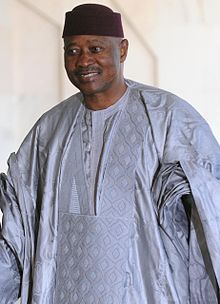 So it is that there is something oddly retro about the news from Mali, where soldiers have seized the TV station and stormed the presidential palace, announcing that President Amadou Toumani Touré has been overthrown and the constitution suspended. Some government ministers have been arrested, but the President himself has escaped the rebels' clutches and is reputedly being protected by the presidential guards.
The coup in Mali is shocking, in that the country had previously been thought of as having made a reasonably successful transition to democratic rule, despite its relative poverty. Touré himself had originally come to power in a 1991 coup against a brutal dictatorship, but he oversaw a transition to representative government, relinquishing power to elected civilians in 1992. Touré later re-entered politics, winning election to the presidency in 2002 (and re-election in 2007).
So, why the coup? It seems that President Touré's rule had become a lot less popular recently, thanks largely to an insurgency in the north of the country. Some ethnic Tuaregs there had become disaffected with the central government of Mali and had taken up arms against it. Malian armed forces had performed badly against the rebels (many of whom seem to have been veterans of the civil war in Libya) and the army's poor performance was blamed on President Touré.
Still, it seems odd that simple disaffection with the President has led to the coup. Touré was due to step down next month when elections for a new president where scheduled – if his removal was the real goal then the putschists could simply have waited till then. It may be that the coup leaders are hoping to install a security regime that will funnel resources to the army to fight the insurgents in the north, or it could that they simply seized the opportunity to take power that Touré's weakness presented.
 It is unclear whether the coup will succeed in overthrowing the constitutional government of Mali. Although the putschists seem strong now, they have failed to capture the president. The rebellious soldiers appear to be undisciplined and ill-equipped, while the president's own guard are a well trained and well equipped force. Furthermore, the rebels are led by a junior officer, Captain Amadou Sanogo, and do not seem to have the backing of the entire armed forces. It may be, therefore, that the coup will fizzle out, or perhaps we will be hearing a lot more of Captain Sanogo over the next few years.
Amadou Toumani Touré image source
More:
Mali soldiers loot presidential palace after coup
In pictures: Mali coup
From Hunting Monsters
Subscribe to:
Posts (Atom)

