Iceland’s president, Olafur Ragnar Grimsson, has vetoed a controversial bill designed to compensate the UK and Netherlands for people who lost money when the Icelandic bank Landsbanki collapsed last year. A quarter of the country’s population had signed a petition opposing the Bill. President Grimsson is going to put the bill to a referendum.
This is fascinating on any number of levels. The compensation deal was negotiated by the Icelandic government with their British and Dutch counterparts, and it seems to be a pre-condition for the country receiving IMF loans. Backsliding on it would also kill Iceland’s hopes for rapid accession to the EU.
The veto is particularly interesting to the select band of people who take an interest in semi-presidential politics. Iceland’s president is directly elected, but fulfils a primarily ceremonial role. The power to refer proposed laws to a referendum was inherited from the reserve powers of the Danish crown when Iceland became independent in the 1940s, and has never hitherto been used. There is an idea in constitutional theory that an office’s unused powers atrophy and effectively become unusual, but in this case President Grimsson has shown that, in times of crisis, moribund powers can suddenly spring back into life.
More:
Iceland leader vetoes bank repayments bill (BBC)
Iceland president vetoes collapsed Icesave Bank's bill to UK (Guardian)
Showing posts with label Semi-presidentialism. Show all posts
Showing posts with label Semi-presidentialism. Show all posts
09 January, 2010


07 April, 2009
Phantom Countries: Northern Cyprus
My series on anomalous and unrecognised countries returns!
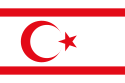 The full name of this phantom country is the Turkish Republic of Northern Cyprus. As that suggests, Northern Cyprus lies along the northern edge of Cyprus, and it is inhabited by people who have a Turkish ethnic identity. Turkey is the only country that recognises its independence. This is not entirely coincidental. Northern Cyprus was established on the territory seized from the rest of Cyprus by the Turkish army in 1974.
 Cyprus had previously become independent from Britain as a unified state. Ethnic Greeks formed a substantial majority. Relations between them and the Turkish Cypriot minority were often tense. In coup brought a right-wing clique to power in Cyprus. They were committed to unifying Cyprus with the rest of Greece, then also ruled by an ultra-nationalist right-wing dictatorship. The prospects for Cypriot Turks would then have been rather poor. In response, Turkey launched an invasion of the island. Resistance was easily crushed, with the Turkish army establishing control of what subsequently became Northern Cyprus.
My understanding is that the invasion triggered a bout of ethnic cleansing. All (or almost all) Greek Cypriots were expelled from the northern zone, with almost all Turkish Cypriots moving north (freely or under duress) from the territory retained by the Republic of Cyprus. The Turkish Republic of Northern Cyprus was formally established in the early 1980s.
For many years after the Turkish invasion, the island of Cyprus was divided by a no-man's land patrolled by UN troops, with the capital city of Nicosia divided by a mini-Berlin Wall. The restrictions on movements between the two parts of the island have eased in recent years. Nevertheless, without the ongoing support of Turkey (which maintains a sizeable military presence on the island), Northern Cyprus would not be able to resist reabsorption into the Republic of Cyprus.
Northern Cyprus is an odd and ambiguous place, even by the standards of phantom countries. It is largely unrecognised as a state, yet it seems to have a certain tacit recognition as a de facto player in the drama of Cypriot politics (not least from the internationally recognised Republic of Cyprus, whose leaders negotiate directly with their Northern Cypriot counterparts). The region nevertheless looks unlikely to gain widespread recognition as an independent state. This does not seem to even be a key goal of the Northern Cypriot leaders - they seem to be seeking not so much wider recognition for their "state", but its dissolution. Their goal is to unify Cyprus as a confederal state, with Northern Cyprus and the internationally recognised Republic of Cyprus as sub-units. The motor for this lack of interest in Northern Cypriot nationalism is economic – Northern Cyprus has stagnated since the island was partitioned, while the internationally recognised Republic of Cyprus has motored ahead.
In 2004 it seemed as though the conflict on Cyprus was about to be resolved. Under EU & UN auspices, the leaders of the two Cypriot entities had agreed a deal that would have seen the island reunited as a decentralised state comprising two subunits. The deal failed because southern Cypriot leaders developed second thoughts and successfully urged their compatriots to reject the deal in a referendum. The EU was caught on the hop by this unexpected outcome, as southern Cyprus had been allowed to accede to the European Union regardless of the outcome of the referendum. That allows southern Cyprus to block or disrupt EU engagement with either Turkey or Northern Cyprus.
So where now lies the future for Northern Cyprus and the rest of the island? The likelihood must be that eventually some kind of deal is done that is acceptable to both parts of the island, and this will lead to the establishment of a bi-national state with Greek and Turkish sub-units. One odd thing about all this is that this is likely to be an apartheid solution, with the Greek and Turkish Cypriot populations remaining in their ethnically homogenous regions. Northern Cyprus will probably surrender substantial territories to the Greek Cypriot zone, reflecting the relative imbalance in power, wealth, and population between the two communities.
Politically, Northern Cyprus seems to be a functional representative democracy. It has semi-presidential constitution, with the president exercising more power than the prime minister.
As an aside, Northern Cyprus is one of the more readily visit able phantom countries. One can fly there, albeit with a stopover in Turkey, and my understanding is that one can now cross from the Republic of Cyprus to the TRNC. I believe Northern Cyprus to have a reasonably developed tourist infrastructure and a surprising number of sites of interest to the discerning traveller.
EDIT: see comments for fascinating semi-presidentialism related chit chat.
image source
The full name of this phantom country is the Turkish Republic of Northern Cyprus. As that suggests, Northern Cyprus lies along the northern edge of Cyprus, and it is inhabited by people who have a Turkish ethnic identity. Turkey is the only country that recognises its independence. This is not entirely coincidental. Northern Cyprus was established on the territory seized from the rest of Cyprus by the Turkish army in 1974. Cyprus had previously become independent from Britain as a unified state. Ethnic Greeks formed a substantial majority. Relations between them and the Turkish Cypriot minority were often tense. In coup brought a right-wing clique to power in Cyprus. They were committed to unifying Cyprus with the rest of Greece, then also ruled by an ultra-nationalist right-wing dictatorship. The prospects for Cypriot Turks would then have been rather poor. In response, Turkey launched an invasion of the island. Resistance was easily crushed, with the Turkish army establishing control of what subsequently became Northern Cyprus.My understanding is that the invasion triggered a bout of ethnic cleansing. All (or almost all) Greek Cypriots were expelled from the northern zone, with almost all Turkish Cypriots moving north (freely or under duress) from the territory retained by the Republic of Cyprus. The Turkish Republic of Northern Cyprus was formally established in the early 1980s.
For many years after the Turkish invasion, the island of Cyprus was divided by a no-man's land patrolled by UN troops, with the capital city of Nicosia divided by a mini-Berlin Wall. The restrictions on movements between the two parts of the island have eased in recent years. Nevertheless, without the ongoing support of Turkey (which maintains a sizeable military presence on the island), Northern Cyprus would not be able to resist reabsorption into the Republic of Cyprus.
Northern Cyprus is an odd and ambiguous place, even by the standards of phantom countries. It is largely unrecognised as a state, yet it seems to have a certain tacit recognition as a de facto player in the drama of Cypriot politics (not least from the internationally recognised Republic of Cyprus, whose leaders negotiate directly with their Northern Cypriot counterparts). The region nevertheless looks unlikely to gain widespread recognition as an independent state. This does not seem to even be a key goal of the Northern Cypriot leaders - they seem to be seeking not so much wider recognition for their "state", but its dissolution. Their goal is to unify Cyprus as a confederal state, with Northern Cyprus and the internationally recognised Republic of Cyprus as sub-units. The motor for this lack of interest in Northern Cypriot nationalism is economic – Northern Cyprus has stagnated since the island was partitioned, while the internationally recognised Republic of Cyprus has motored ahead.
In 2004 it seemed as though the conflict on Cyprus was about to be resolved. Under EU & UN auspices, the leaders of the two Cypriot entities had agreed a deal that would have seen the island reunited as a decentralised state comprising two subunits. The deal failed because southern Cypriot leaders developed second thoughts and successfully urged their compatriots to reject the deal in a referendum. The EU was caught on the hop by this unexpected outcome, as southern Cyprus had been allowed to accede to the European Union regardless of the outcome of the referendum. That allows southern Cyprus to block or disrupt EU engagement with either Turkey or Northern Cyprus.
So where now lies the future for Northern Cyprus and the rest of the island? The likelihood must be that eventually some kind of deal is done that is acceptable to both parts of the island, and this will lead to the establishment of a bi-national state with Greek and Turkish sub-units. One odd thing about all this is that this is likely to be an apartheid solution, with the Greek and Turkish Cypriot populations remaining in their ethnically homogenous regions. Northern Cyprus will probably surrender substantial territories to the Greek Cypriot zone, reflecting the relative imbalance in power, wealth, and population between the two communities.
Politically, Northern Cyprus seems to be a functional representative democracy. It has semi-presidential constitution, with the president exercising more power than the prime minister.
As an aside, Northern Cyprus is one of the more readily visit able phantom countries. One can fly there, albeit with a stopover in Turkey, and my understanding is that one can now cross from the Republic of Cyprus to the TRNC. I believe Northern Cyprus to have a reasonably developed tourist infrastructure and a surprising number of sites of interest to the discerning traveller.
EDIT: see comments for fascinating semi-presidentialism related chit chat.
image source
06 February, 2009
Russia's faux semi-presidentialism
Russia is often lazily lumped in with semi-presidential countries, largely because it has a president and a prime minister. The model does not really fit. Dmitry Medvedev's assumption of the presidency was so managed by the country's elite that you cannot really call the president directly elected, while Prime Minister Vladimir Putin is only responsible to the Russian parliament in the most notional of senses. Meanwhile, state maintains a stranglehold on the media and journalists who criticise the regime have an unfortunate tendency die sudden and violent deaths. Russia is effectively an authoritarian regime with a semi-presidential façade.
Still, Russia has the trappings of a dual executive system, and there is always the possibility that the premiership and presidency could turn into rival centres of power. When Putin handed over the presidency to Medvedev and assumed the premiership, it was widely believed that he would remain the real master of Russia, with Medvedev acting as his puppet or the friendly face he could present to the world. Events seemed to support this interpretation, with Putin appearing to use the premiership as a way of ruling form the shadows.
 More recently, though, there have appeared what might be the first signs of a Putin-Medvedev split. Russia's economy has been hit hard by the collapse in oil prices, and without petrodollars to throw around the regime finds it harder to buy compliance. Russian cities have seen demonstrations recently, with angry people hit by the economic crisis taking to the streets. Perhaps in an effort to shore up his own position, Medvedev has made some statements that could be interpreted as criticism of his prime minister's response. In the more presidential of semi-presidential countries, presidents often seek to attach the blame for all regime failures to their premiers; this would have been normal when Putin or his predecessor were Russia's presidents. The prospect of a Putin-Medvedev split is interesting, though one should not assume that its victor would be Medvedev. Putin's power seems largely to come from his being Putin and from his personal control of the state security apparatus; that could easily trump Medvedev's mandate in a comedic election, unless Russia's leading figures decide that Putin has become a liability.
 The nascent Putin-Medvedev split could of course all be a charade, with the two pals merely playing good-cop bad-cop with the Russian people. The BBC, however, reports that there may be genuine differences emerging between the two. These differences are not primarily political, but musical. It appears that Russia's prime minister is a fan of Abba, recently flying in Abba tribute act Bjorn Again to play a private concert for himself, a mysterious and attractive young lady, and some of his cohorts (all at a trifling cost of £20,000). President Medvedev, however, is a keen fan of Deep Purple, last year enjoying them in concert at the 15th anniversary celebrations of Gazprom. Perhaps it was a fraught discussion on rockism that has brought forth tensions in the Putin-Medvedev partnership.
To follow all the latest Russian news, make sure to read Pravda.
images
Still, Russia has the trappings of a dual executive system, and there is always the possibility that the premiership and presidency could turn into rival centres of power. When Putin handed over the presidency to Medvedev and assumed the premiership, it was widely believed that he would remain the real master of Russia, with Medvedev acting as his puppet or the friendly face he could present to the world. Events seemed to support this interpretation, with Putin appearing to use the premiership as a way of ruling form the shadows.
More recently, though, there have appeared what might be the first signs of a Putin-Medvedev split. Russia's economy has been hit hard by the collapse in oil prices, and without petrodollars to throw around the regime finds it harder to buy compliance. Russian cities have seen demonstrations recently, with angry people hit by the economic crisis taking to the streets. Perhaps in an effort to shore up his own position, Medvedev has made some statements that could be interpreted as criticism of his prime minister's response. In the more presidential of semi-presidential countries, presidents often seek to attach the blame for all regime failures to their premiers; this would have been normal when Putin or his predecessor were Russia's presidents. The prospect of a Putin-Medvedev split is interesting, though one should not assume that its victor would be Medvedev. Putin's power seems largely to come from his being Putin and from his personal control of the state security apparatus; that could easily trump Medvedev's mandate in a comedic election, unless Russia's leading figures decide that Putin has become a liability.The nascent Putin-Medvedev split could of course all be a charade, with the two pals merely playing good-cop bad-cop with the Russian people. The BBC, however, reports that there may be genuine differences emerging between the two. These differences are not primarily political, but musical. It appears that Russia's prime minister is a fan of Abba, recently flying in Abba tribute act Bjorn Again to play a private concert for himself, a mysterious and attractive young lady, and some of his cohorts (all at a trifling cost of £20,000). President Medvedev, however, is a keen fan of Deep Purple, last year enjoying them in concert at the 15th anniversary celebrations of Gazprom. Perhaps it was a fraught discussion on rockism that has brought forth tensions in the Putin-Medvedev partnership.To follow all the latest Russian news, make sure to read Pravda.
images
07 September, 2008
Pakistan and semi-presidentialism
Pakistan's constitutional setup is somewhat interesting. Executive power lies with a prime minister who is responsible to a parliament, but the country also boasts a powerful presidency. The president can sack the prime minister and call elections, and is also head of the country's armed forces. Crucially, perhaps, it is not the prime minister but the president who controls Pakistan's nuclear arsenal.
The Pakistani president is not directly elected. Rather, it is the country's parliament who elect the president. This makes Pakistan a bit of a taxonomical anomaly. It is not semi-presidential, because every definition of semi-presidentialism requires the president to be popularly elected. But it seems problematic to think of the country as a parliamentary system, given the power over parliament exercised by the president*. And while the powers of Pakistan's appointed president are perhaps unusually high, the country is not unique in having an unelected president who is a serious player in the country's politics. Off the top of my head, the Czech Republic, Israel, and (to an extent) Italy spring to mind as countries where the president is appointed by parliament but plays more than a purely ceremonial part in national politics.
Definitions of semi-presidentialism focus on the direct election of the president**. This leads to the lumping together of countries with powerful activist presidents and ones where the president has a purely symbolic role. This is not necessarily that problematic, as you can then go on to ask interesting questions about why one directly elected president is powerless while another is the centre of their country's politics. But maybe in another way it misses something. Power is surely the currency of politics, and what makes semi-presidential systems interesting is the (real or potential) presence of two loci of power. By focusing on how presidents are appointed, semi-presidentialists look at one type of dual-executive set-up but ignore others. This does seem problematic, as you can end up analytically separating political systems that end up closely resembling each other.
If I was in the business of further academic research, one thing I would consider looking at would be some kind of comparison of presidents in countries where they are elected and countries where they are appointed by parliament. One thing I have picked up is that there has been relatively little academic research on appointed presidencies, even where these are players in their countries' politics, and this strikes me as an obvious gap that needs filling.
*this is aside from Pakistan's status as a country of questionable democratic credentials, where real power is exercised by a variety of entrenched yet dysfunctional elites immune from electoral accountability
**and their being faced by a prime minister responsible to parliament, obv.
The Pakistani president is not directly elected. Rather, it is the country's parliament who elect the president. This makes Pakistan a bit of a taxonomical anomaly. It is not semi-presidential, because every definition of semi-presidentialism requires the president to be popularly elected. But it seems problematic to think of the country as a parliamentary system, given the power over parliament exercised by the president*. And while the powers of Pakistan's appointed president are perhaps unusually high, the country is not unique in having an unelected president who is a serious player in the country's politics. Off the top of my head, the Czech Republic, Israel, and (to an extent) Italy spring to mind as countries where the president is appointed by parliament but plays more than a purely ceremonial part in national politics.
Definitions of semi-presidentialism focus on the direct election of the president**. This leads to the lumping together of countries with powerful activist presidents and ones where the president has a purely symbolic role. This is not necessarily that problematic, as you can then go on to ask interesting questions about why one directly elected president is powerless while another is the centre of their country's politics. But maybe in another way it misses something. Power is surely the currency of politics, and what makes semi-presidential systems interesting is the (real or potential) presence of two loci of power. By focusing on how presidents are appointed, semi-presidentialists look at one type of dual-executive set-up but ignore others. This does seem problematic, as you can end up analytically separating political systems that end up closely resembling each other.
If I was in the business of further academic research, one thing I would consider looking at would be some kind of comparison of presidents in countries where they are elected and countries where they are appointed by parliament. One thing I have picked up is that there has been relatively little academic research on appointed presidencies, even where these are players in their countries' politics, and this strikes me as an obvious gap that needs filling.
*this is aside from Pakistan's status as a country of questionable democratic credentials, where real power is exercised by a variety of entrenched yet dysfunctional elites immune from electoral accountability
**and their being faced by a prime minister responsible to parliament, obv.
13 July, 2008
Meanwhile in Mongolia...
Talking of semi-presidentialism, Mongolia has been seen as something of a success story for that institutional setup, with writers like M. Steven Fish crediting the bifurcating power structure with helping to embed democracy and protect Mongolia from dominance by either of its larger and more populous neighbours. Recently, however, the country has seen disputed elections and a state of emergency declared following riots accusations of electoral fraud against the ruling Mongolian People's Revolutionary Party (the country's former communists). Perhaps not even semi-presidentialism can save Mongolia from sliding down the road towards the authoritarianism of other post-communist steppe countries like Uzbekistan, Kazakhstan, Turkemenistan, etc.. I don't know that much about Mongolia, but I wonder if this kind of thing suggests a triumph of objective social conditions over institutions - supporting quasi-marxist ideas about institutions being fluff that sits on top of the real economic determinants of socio-politicals life.
Hey, nice blog!
If you have ever wanted to follow the latest semi-presidential action in blog form, then check out THE SEMI-PRESIDENTIAL ONE. As you know, a country is semi-presidential if its president is directly elected and it has a prime minister responsible to parliament, with presidential powers added to taste.
05 April, 2008
I know all about Ethiopia
Look forward to lots of well-informed posts on Ethiopian politics and society, as I am researching the country* preparatory to a possible visit there in July.
They seem to have a semi-presidential semi-democratic political system. Fascinating.
*i.e. reading the Bradt Ethiopia guidebook
They seem to have a semi-presidential semi-democratic political system. Fascinating.
*i.e. reading the Bradt Ethiopia guidebook
20 November, 2007
Russians Can't Get Enough of Vladimir Putin
 The BBC reports that a petition calling for Vladimir Putin to remain "national leader" has been signed by 30 million Russians; this is more than a fifth of the country's total population. The constitution currently prevents Putin from seeking re-election when his current presidential term expires next March. However, Vladimir Voronin of the For Putin group points out that constitutions can be changed, as only God's law is immutable. Putin has always said that he would not seek re-election, but as previously noted, there is nothing to prevent him becoming the country's prime minister and transforming that office into the country's main leadership position.
01 October, 2007
From President to Prime Minister
The BBC reports that when he steps down as president, Vladimir Putin is going to run for the Russian parliament and that he aspires to become the country's prime minister. The BBC reports this as a shocking new development, though I had read this suggested in the academic literature on Russian semi-presidentialism. People have been wondering for some time whether Putin was really going to step down as president, given his obvious enjoyment of being the top dog in Russian politics. The switch to prime minister allows him to remain at the centre of politics without having to change the constitution to allow him to run for another term; and prime ministers are not bound by inconvenient term limits.
At the moment, the constitution makes the Russian prime minister clearly subservient to the president, and the BBC quotes one Andrei Ryabov of the Carnegie Moscow Center as saying that the consitution will need to be changed to allow Putin to remain the country's leader. This may or may not be the case. One thing you often see with semi-presidential systems is that the primacy of the premiership and presidency is decided not by the constitutional prerogatives of the offices, but by who occupies them. In Russia's case, Putin as prime minister will remain the man around whom politics has rotated for the last seven years. It is still not clear who Putin favours as his successor, but it should not be impossible for him to find a pliant yes-man to run for the job.
At the moment, the constitution makes the Russian prime minister clearly subservient to the president, and the BBC quotes one Andrei Ryabov of the Carnegie Moscow Center as saying that the consitution will need to be changed to allow Putin to remain the country's leader. This may or may not be the case. One thing you often see with semi-presidential systems is that the primacy of the premiership and presidency is decided not by the constitutional prerogatives of the offices, but by who occupies them. In Russia's case, Putin as prime minister will remain the man around whom politics has rotated for the last seven years. It is still not clear who Putin favours as his successor, but it should not be impossible for him to find a pliant yes-man to run for the job.
02 September, 2007
I need to get out more
I am reading this book by Amin Maalouf called "The Crusades Through Arab Eyes". Last night I had a great anxiety dream, about how my thesis needs a last minute change to discuss the impact of the fall of the Abbasid Caliphate on Palestinian semi-presidentialism.
01 September, 2007
Polish elections
There are elections taking place in Poland later this year. The last elections were held only two years ago. These early elections have been triggered by the collapse of the governing coalition, with Self-Defence and The League of Polish Families dropping out of the coalition dominated by the Law & Justice party (Law & Justice is often abbreviated in English to its Polish initials, PiS).
The last round of elections saw parliamentary and presidential elections take place in a short space of time. They produced the unusual result whereby two twin brothers came to dominate Poland's politics, with Lech Kaczynski becoming the country's president and Jaroslaw Kaczynski the leader of the largest government party (and subsequently the prime minister). The Kaczynskis then proceeded to govern in a manner that appealed strongly to their natural supporters, while simultanaeously convincing many other observers of the country's politics that they are a pair of boorish fuckwits.
It is funny noticing how international sentiment turned against the twins. Around the time of their elevation, a lot of international commentators were saying things like "they may be a pair of ultra-catholic weirdos, but they do seem to be serious about stamping out the corruption and cronyism that have bedevilled Poland since the transition". Since then, these commentators have been increasingly struck by the Kaczynskis' love of picking fights with international actors (Germany, the EU, Russia) for no obvious gain except to make populist appeals to Polish public opinion. A certain amount of schadenfreude has greeted the collapse of the governing coalition and the calling of early electons, with people expecting that this will mean an end to the terrible twins. Expectations of the twins' political demise are perhaps premature. There is an interesting article by Derek Scally in today's Irish Times, suggesting that the Kaczynskis remain popular with a large section of the Polish population. PiS could still poll strongly in the election, particularly if the vote turns into a highly polarised contest between PiS and a coalition led by the country's former communists. Even if PiS is hammered in the elections and a new "left" government takes office, we will not have seen the last of the Kaczynskis. Jaroslaw will no longer be prime minister, but Lech will remain as president. Polish presidents have considerable powers, and it would be interesting to see how President Kaczynski manages to deal with a hostile government.
The last round of elections saw parliamentary and presidential elections take place in a short space of time. They produced the unusual result whereby two twin brothers came to dominate Poland's politics, with Lech Kaczynski becoming the country's president and Jaroslaw Kaczynski the leader of the largest government party (and subsequently the prime minister). The Kaczynskis then proceeded to govern in a manner that appealed strongly to their natural supporters, while simultanaeously convincing many other observers of the country's politics that they are a pair of boorish fuckwits.
It is funny noticing how international sentiment turned against the twins. Around the time of their elevation, a lot of international commentators were saying things like "they may be a pair of ultra-catholic weirdos, but they do seem to be serious about stamping out the corruption and cronyism that have bedevilled Poland since the transition". Since then, these commentators have been increasingly struck by the Kaczynskis' love of picking fights with international actors (Germany, the EU, Russia) for no obvious gain except to make populist appeals to Polish public opinion. A certain amount of schadenfreude has greeted the collapse of the governing coalition and the calling of early electons, with people expecting that this will mean an end to the terrible twins. Expectations of the twins' political demise are perhaps premature. There is an interesting article by Derek Scally in today's Irish Times, suggesting that the Kaczynskis remain popular with a large section of the Polish population. PiS could still poll strongly in the election, particularly if the vote turns into a highly polarised contest between PiS and a coalition led by the country's former communists. Even if PiS is hammered in the elections and a new "left" government takes office, we will not have seen the last of the Kaczynskis. Jaroslaw will no longer be prime minister, but Lech will remain as president. Polish presidents have considerable powers, and it would be interesting to see how President Kaczynski manages to deal with a hostile government.
12 August, 2007
Semi-presidential politics in Timor-Leste… slight return
This is another post about semi-presidentialism, triggered by a comment to my last post on Timor-Leste. I understand that many people are not so fascinated by semi-presidentialism that they want to hear more about it, but I am a slave to those who pose me questions.
A mysterious commenter identifying him or herself only as Rhunzzz mentioned the concepts of premier-presidentialism and president-parliamentarism, originally formulated by scholars Shugart & Carey. My recollection is that they took a dislike to the term semi-presidentialism and attempted to coin new terms they felt were more descriptive. Their terms seem to have caught on to some extent, but mainly as explicit subtypes of semi-presidential regimes. The premier-presidential type sees more power in the relationship going to the prime minister, but with the elected president still doing more than nothing, while their definition of a president-parliamentary regime is one where the president can sack the prime minister or individual ministers (but I think with their replacements still being subject to parliamentary approval).
As is the way of the human world, it is difficult to precisely assign semi-presidential countries into one or other regime type. French presidents, say, often act as though they can sack ministers and prime ministers, but they do not actually have the constitutional power to do this; they can force ministerial resignations if they are the head of the government party or coalition, but not if the Assembly's majority is united against them. For all that people do use the premier-presidential v. presidential-parliamentary distinction, it all seesm a bit hair-splitty in practice.
In the Palestinian Authority, the president can sack a prime minister, but the sacked prime minister remains in office in a caretaker capacity with their government until the Palestinian parliament chooses a successor. It is not obvious to me that the president can sack individual ministers, which reminds me that I need to download the Basic Law of the Palestinian Authority. I think that it the president can only sack the prime minister but not individual ministers then we are in premier-presidential territory. For more on the prerogatives of PA presidents and prime ministers, I refer you to Nathan J. Brown's "What can Abu Mazin do?".
In Timor-Leste, the constitutional powers of the president are pretty limited, which is probably one reason why Xanana Gusmao has chosen to move from the presidency to the premiership. Gusmao as president was nevertheless able to use his personal prestige and massive electoral mandate to assume a more than ceremonial role in the country's politics, playing a part in forcing Prime Minister Alkatiri from office.
A mysterious commenter identifying him or herself only as Rhunzzz mentioned the concepts of premier-presidentialism and president-parliamentarism, originally formulated by scholars Shugart & Carey. My recollection is that they took a dislike to the term semi-presidentialism and attempted to coin new terms they felt were more descriptive. Their terms seem to have caught on to some extent, but mainly as explicit subtypes of semi-presidential regimes. The premier-presidential type sees more power in the relationship going to the prime minister, but with the elected president still doing more than nothing, while their definition of a president-parliamentary regime is one where the president can sack the prime minister or individual ministers (but I think with their replacements still being subject to parliamentary approval).
As is the way of the human world, it is difficult to precisely assign semi-presidential countries into one or other regime type. French presidents, say, often act as though they can sack ministers and prime ministers, but they do not actually have the constitutional power to do this; they can force ministerial resignations if they are the head of the government party or coalition, but not if the Assembly's majority is united against them. For all that people do use the premier-presidential v. presidential-parliamentary distinction, it all seesm a bit hair-splitty in practice.
In the Palestinian Authority, the president can sack a prime minister, but the sacked prime minister remains in office in a caretaker capacity with their government until the Palestinian parliament chooses a successor. It is not obvious to me that the president can sack individual ministers, which reminds me that I need to download the Basic Law of the Palestinian Authority. I think that it the president can only sack the prime minister but not individual ministers then we are in premier-presidential territory. For more on the prerogatives of PA presidents and prime ministers, I refer you to Nathan J. Brown's "What can Abu Mazin do?".
In Timor-Leste, the constitutional powers of the president are pretty limited, which is probably one reason why Xanana Gusmao has chosen to move from the presidency to the premiership. Gusmao as president was nevertheless able to use his personal prestige and massive electoral mandate to assume a more than ceremonial role in the country's politics, playing a part in forcing Prime Minister Alkatiri from office.
11 August, 2007
Semi-presidential definitions
This is a long reply to a question posed by Nicholas Whyte in a comment to my last post. He asked whether Cyprus and former Soviet states count as semi-presidential or not. This leads me into a discussion of what constitutes a semi-presidential regime. Unfortunately, there are several definitions of semi-presidentialism, so the answer has to be "it depends". The first English language definition by French scholar Maurice Duverger talked of countries being semi-presidential if they had a popularly elected president who had "considerable powers" but how faced a prime minister who led a government that was responsible to an elected assembly. The "considerable powers" business then leads to considerable debate as to whether a given president in a given country has considerable powers or not. It can also be difficult in practice to identify what powers a president actually has, given the divergence that can occur between a president's constitutionally granted powers and the powers they wield in practice (compare the limited powers of the French president in the constitution with the powers they have actually exercised). Nevertheless, despite these problems, Duverger's definition and definitions derived from it are probably still dominant.
Robert Elgie attempted to produce a semi-presidentialism definition that allows for a more precise determination of whether a country is semi-presidential or not. He skips all that considerable powers stuff by saying that a regime is semi-presidential if it has a popularly elected president and a prime minister responsible to parliament. Using this definition, a semi-presidential country can have a very powerful president, or one who spends his or her time playing golf. Some find this kind of definition problematic, as it includes countries which in practice have politics so similar to parliamentary regimes as to make no difference; if you think the idea of bifurcated power structures is crucial to any discussion of semi-presidentialism as a regime type then Elgie's definition is not for you. However, even with that, a thing you do see in country's with figurehead directly elected presidents is that sometimes they can leverage their status as someone chosen by the people as a whole to exert pressure on the government in a manner bearing little relation to their paper powers. So even a figurehead president might be able to restrain a prime minister, in certain circumstances. Arguably, this kind of happened in Timor-Leste, where President Gusmao announced that he had lost confidence of Prime Minister Alkatiri, increasing the pressure on the latter that ultimately led to his resignation.
And so to the countries Nicholas Whyte mentions. I can't speak for Cyprus, as I don't know too much about how day-to-day politics works in either jurisdiction there. With the countries of the former Soviet Union, political systems there vary greatly. Many of the USSR's successor states are straightforwardly dictatorships. However, most of the ones that do still have some kind of democratic politics in place count as semi-presidential, with the regime-type being apparently more common in former communist countries than either straight presidential or parliamentary regimes. Or so I have read. I have my doubts with some of the countries. Take Russia – it has the prime minister and president you associate with semi-presidentialism, but the prime minister is only responsible to parliament in the most notional of manners. In practice (and probably in the constitution as well, given that it was written by a president who then had it passed at gun point) the prime minister is the president's bitch, someone he gets to look after tawdry day-to-day stuff for him.
Ukraine is more like a classic semi-presidential regime, where the prime minister and president are both powerful, but the prime minister is genuinely responsible to parliament; I think the relationship betweern the offices has changed over time, and the presidency lost a lot of its powers recently as part of the deal that saw Viktor Yushchenko elected to it. I gather that Lithuania is more the kind of country that scrapes into the semi-presidential category only if you use the Elgie definition, as its president is directly elected but aloof from actual politics. I think the rest of the democratic ex-USSR states are at least Elgie semi-presidential, except for Latvia and Estonia, which I believe to have adopted parliamentary regimes at independence, and Moldova, whose parliament changed it to a fully parliamentary regime, much to the chagrin of the then president who wanted things moved in a more fully presidential direction.
Robert Elgie attempted to produce a semi-presidentialism definition that allows for a more precise determination of whether a country is semi-presidential or not. He skips all that considerable powers stuff by saying that a regime is semi-presidential if it has a popularly elected president and a prime minister responsible to parliament. Using this definition, a semi-presidential country can have a very powerful president, or one who spends his or her time playing golf. Some find this kind of definition problematic, as it includes countries which in practice have politics so similar to parliamentary regimes as to make no difference; if you think the idea of bifurcated power structures is crucial to any discussion of semi-presidentialism as a regime type then Elgie's definition is not for you. However, even with that, a thing you do see in country's with figurehead directly elected presidents is that sometimes they can leverage their status as someone chosen by the people as a whole to exert pressure on the government in a manner bearing little relation to their paper powers. So even a figurehead president might be able to restrain a prime minister, in certain circumstances. Arguably, this kind of happened in Timor-Leste, where President Gusmao announced that he had lost confidence of Prime Minister Alkatiri, increasing the pressure on the latter that ultimately led to his resignation.
And so to the countries Nicholas Whyte mentions. I can't speak for Cyprus, as I don't know too much about how day-to-day politics works in either jurisdiction there. With the countries of the former Soviet Union, political systems there vary greatly. Many of the USSR's successor states are straightforwardly dictatorships. However, most of the ones that do still have some kind of democratic politics in place count as semi-presidential, with the regime-type being apparently more common in former communist countries than either straight presidential or parliamentary regimes. Or so I have read. I have my doubts with some of the countries. Take Russia – it has the prime minister and president you associate with semi-presidentialism, but the prime minister is only responsible to parliament in the most notional of manners. In practice (and probably in the constitution as well, given that it was written by a president who then had it passed at gun point) the prime minister is the president's bitch, someone he gets to look after tawdry day-to-day stuff for him.
Ukraine is more like a classic semi-presidential regime, where the prime minister and president are both powerful, but the prime minister is genuinely responsible to parliament; I think the relationship betweern the offices has changed over time, and the presidency lost a lot of its powers recently as part of the deal that saw Viktor Yushchenko elected to it. I gather that Lithuania is more the kind of country that scrapes into the semi-presidential category only if you use the Elgie definition, as its president is directly elected but aloof from actual politics. I think the rest of the democratic ex-USSR states are at least Elgie semi-presidential, except for Latvia and Estonia, which I believe to have adopted parliamentary regimes at independence, and Moldova, whose parliament changed it to a fully parliamentary regime, much to the chagrin of the then president who wanted things moved in a more fully presidential direction.
09 August, 2007
Semi-presidential politics in Timor-Leste
One great thing about the reading around my thesis is that I have got to read about loads of countries I previously did not too much about. This arises because in trying to form a comparative framework in which to place a study of semi-presidentialism in Palestine I need to look at other countries with a similar kind of institutional setup. I may well pad out this blog for years to come with fascinating facts about semi-presidential countries from around the world.
Today it is the turn of Timor-Leste, as the former Portuguese colony of East Timor know prefers to be called. While the country was ruled by Indonesia the place became something of a cause celèbre, partly resulting from the thuggish and near genocidal rule of the Indonesian military. With independence, the country largely dropped off the world's radar, or at least it did off mine, apart from a sense that the country's post-independence politics had all proved a bit tawdry and disappointing.
My very limited reading about Timor-Leste suggests some interesting things about the country's politics. Indonesian rule was resisted both militarily and politically, as is often the case in occupied countries. What one sometimes see in such situations is that if the national struggle is ever successfully concluded then a tension erupts between the political and military side of the nationalist movement. Analysis tends to depict the political side of any ensuing conflict as the good guys, in that they are the ones who will do politics (run for elections, form governments, make the kind of political compromises that are needed in a democratic society). In contrast, the militarists are seen as the bad guys – while they may have proved useful during the freedom struggle, the kind of mindset honed by warfare is inimical to democratic politics. Militarists are seen as hostile to compromise and having a belief in discipline and hierarchy that meshes badly with the give and take of pluralist politics. That, as I say, is the default position on such matters, or maybe I am just generalising too much from the history of my own country.
Timor-Leste seems to run counter to that default position. There, the political wing of the national struggle seems to have produced a party (FRETILIN) with a closed, illiberal, and crypto-authoritarian outlook, one that sees itself as the sole legitimate representation of Timor-Leste's people. In contrast, the military wing of the movement produced in Xanana Gusmao a leader who seems far keener to reach out across Timor-Lestean society and to respect democratic norms; during the Indonesian occupation he transformed the guerrilla army from being a FRETILIN militia to being a more broadly based outside the party's control. It is maybe easy to see why FRETILIN turned out the way it did – the party early on adopted a Marxist-Leninist ideology that lends itself to vanguardism, and the party cultivated close links to authoritarian leftist regimes in Africa from whom shady ideas could be picked up. Gusmao's non-bonapartism is maybe a bit harder to explain, but I will leave that to people who know more about the country to engage with.
As a semi-presidential regime, Timor-Leste has also bucked the trend. In these kind of countries, particularly when they are newly democratising, there is a tendency to see the president as embodying authoritarian tendencies, with the parliamentary side of things serving as a democratic brake. After Timor-Leste's first presidential and parliamentary elections the country was pitched into cohabitation, with the parliament choosing a prime minister hostile to the president. However, it was nasty, authoritarian FRETILIN who picked the prime minister, while President Gusmao ended up serving as a brake on their crypto-authoritarianism. The country's divisions, reflected by the split executive, saw the country becoming increasingly destabilised, with a series of riots and army mutinies leading to the smashing up of any infrastructure the Indonesians had not wrecked before they pulled out. Elections this year saw Gusmao ally (and Nobel laureate) Jose Ramos-Horta elected to the presidency while Gusmao has just become prime minister at the head of a coalition government. Maybe this united executive will be able to stabilise the country's politics, though the pro-FRETILIN riots that greeted Gusmao's appointment suggest they have a way to go yet. Still, a coalition government, even one that excludes FRETILIN, is probably a good thing for the country at this point, certainly better than the FRETILIN dominated parliament it had before the elections.
One caveat on all this – I have actually read so little on Timor-Leste that I could be passing on a very skewed impression of the country's politics. It is only really one scholarly article* from which I picked up the idea of Gusmao-good FRETILIN-bad position, so if that was written by someone with tendentious views then I could be seriously misleading you. However, the fact that Mara Alkatiri, the FRETILIN leader, has denounced the current government as illegal, despite its parliamentary majority, suggests that his party's commitment to democratic electoral outcomes is a bit tenuous.
*Shoesmith, Dennis (2003) 'Timor-Leste: divided leadership in a semi-presidential system' Asian Survey, 43 (2), 231-252
Today it is the turn of Timor-Leste, as the former Portuguese colony of East Timor know prefers to be called. While the country was ruled by Indonesia the place became something of a cause celèbre, partly resulting from the thuggish and near genocidal rule of the Indonesian military. With independence, the country largely dropped off the world's radar, or at least it did off mine, apart from a sense that the country's post-independence politics had all proved a bit tawdry and disappointing.
My very limited reading about Timor-Leste suggests some interesting things about the country's politics. Indonesian rule was resisted both militarily and politically, as is often the case in occupied countries. What one sometimes see in such situations is that if the national struggle is ever successfully concluded then a tension erupts between the political and military side of the nationalist movement. Analysis tends to depict the political side of any ensuing conflict as the good guys, in that they are the ones who will do politics (run for elections, form governments, make the kind of political compromises that are needed in a democratic society). In contrast, the militarists are seen as the bad guys – while they may have proved useful during the freedom struggle, the kind of mindset honed by warfare is inimical to democratic politics. Militarists are seen as hostile to compromise and having a belief in discipline and hierarchy that meshes badly with the give and take of pluralist politics. That, as I say, is the default position on such matters, or maybe I am just generalising too much from the history of my own country.
Timor-Leste seems to run counter to that default position. There, the political wing of the national struggle seems to have produced a party (FRETILIN) with a closed, illiberal, and crypto-authoritarian outlook, one that sees itself as the sole legitimate representation of Timor-Leste's people. In contrast, the military wing of the movement produced in Xanana Gusmao a leader who seems far keener to reach out across Timor-Lestean society and to respect democratic norms; during the Indonesian occupation he transformed the guerrilla army from being a FRETILIN militia to being a more broadly based outside the party's control. It is maybe easy to see why FRETILIN turned out the way it did – the party early on adopted a Marxist-Leninist ideology that lends itself to vanguardism, and the party cultivated close links to authoritarian leftist regimes in Africa from whom shady ideas could be picked up. Gusmao's non-bonapartism is maybe a bit harder to explain, but I will leave that to people who know more about the country to engage with.
As a semi-presidential regime, Timor-Leste has also bucked the trend. In these kind of countries, particularly when they are newly democratising, there is a tendency to see the president as embodying authoritarian tendencies, with the parliamentary side of things serving as a democratic brake. After Timor-Leste's first presidential and parliamentary elections the country was pitched into cohabitation, with the parliament choosing a prime minister hostile to the president. However, it was nasty, authoritarian FRETILIN who picked the prime minister, while President Gusmao ended up serving as a brake on their crypto-authoritarianism. The country's divisions, reflected by the split executive, saw the country becoming increasingly destabilised, with a series of riots and army mutinies leading to the smashing up of any infrastructure the Indonesians had not wrecked before they pulled out. Elections this year saw Gusmao ally (and Nobel laureate) Jose Ramos-Horta elected to the presidency while Gusmao has just become prime minister at the head of a coalition government. Maybe this united executive will be able to stabilise the country's politics, though the pro-FRETILIN riots that greeted Gusmao's appointment suggest they have a way to go yet. Still, a coalition government, even one that excludes FRETILIN, is probably a good thing for the country at this point, certainly better than the FRETILIN dominated parliament it had before the elections.
One caveat on all this – I have actually read so little on Timor-Leste that I could be passing on a very skewed impression of the country's politics. It is only really one scholarly article* from which I picked up the idea of Gusmao-good FRETILIN-bad position, so if that was written by someone with tendentious views then I could be seriously misleading you. However, the fact that Mara Alkatiri, the FRETILIN leader, has denounced the current government as illegal, despite its parliamentary majority, suggests that his party's commitment to democratic electoral outcomes is a bit tenuous.
*Shoesmith, Dennis (2003) 'Timor-Leste: divided leadership in a semi-presidential system' Asian Survey, 43 (2), 231-252
13 June, 2007
Palestinian Semi-Presidentialism and Counterfactuals
I am always guided by inertia. In choosing a thesis topic for Spy School I have ended up combining my supervisor's own academic interest in semi-presidentialism with my own general interest in Palestine to produce a thesis topic based around semi-presidentialism in Palestine. In terms of thesis questions, I will be asking whether the Palestinian Authority's semi-presidential regime is a significant cause of its current collapse; my answer will probably be "no".
Just to recap, semi-presidentialism is what you have when a directly elected president faces off against a premier responsible to a parliamentary assembly. Depending on which definition you are rolling with, the president might need to have considerable powers, or they might not. My supervisor, who could stake a good claim to being Mr Semi-Presidentialism, favours a procedural definition whereby the president merely needs to be popularly elected for a regime to be semi-presidential.
Some people do not like semi-presidentialism. Either it turns into a de facto presidential regime (with empirical research suggesting that presidential regimes tend towards rubbishness) or else the dual authority problem (a directly elected president facing off against a premier responsible to a directly elected parliament) exacerbates political tensions and leads to gridlock, political paralysis, or worse. In newly democratising regimes where the norms of democratic behaviour have not been internalised, there is the fear that tensions between the president and premier will be resolved in a non-constitutional manner (see recent events in Ukraine)
And so to Palestine. One interesting thing about the Palestinian Authority is that its continued existence currently looks very shaky, with a real likelihood that it will no longer exist by the time I have completed my thesis. This may or may not be a bad thing for the Palestinians, but it is great for me, as it means I will not have to make any awkward predictions about the regime's future. The PA has had a semi-presidential setup for the last couple of years and there has been escalating tension between the president and prime minister's parties, spilling over into armed conflict. So you could argue that that semi-presidentialism has been a cause of instability there. You would however probably be wrong to see it as a major factor. Instead, three things are more salient. Firstly, the political parties are armed, with their cadres quite willing to turn their guns on each other should things get nasty. Secondly, the PA is weakly institutionalised; while it has a notionally impressive security apparatus, the various security agencies are largely autonomous from the political elite and are in any case controlled by placemen of the Fatah party who are resistant to being moved. Thirdly, the PA is largely dependent on external sources of funding, but its donors have an animus towards the Hamas party; thus, since Hamas entered the government, the PA has been starved of funds, leading to a collapse in its administrative capability and much sulkiness by unpaid security personnel inclined to blame their personal travails on the Hamas administration.
Some counterfactuals are maybe interesting as a way of considering whether different institutional setups would see different outcomes following the Hamas victory in last year's legislature elections. Firstly, consider if the PA had a purely presidential regime. Hamas gaining a majority in the legislature would not cause serious problems for President Abbas, as he would retain control of executive functions in a political entity that does not do much in the way of passing laws. Abbas would probably be able to play the situation to his advantage, playing the PHEAR TEH ISLAMIST card to the international community to justify cracking down on his political enemies and postponing anything approximating to free presidential elections to the distant future for fear that this would see Hamas take over the PA; he would probably receive a pat on the back if he staged an autogolpe and shut down the parliament. Maybe the Israelis would throw Abbas a few scraps to make him look good compared to his internal challengers, but as Abbas' role is to be their Palestinian gang-boss he should not expect too much. Abbas might or might not face a revolt from Hamas down the line, but given their ambivalence about the PA in the first place they might not challenge for its ownership. So this is still possibly the highest scoring outcome for the Palestinians – although it is bedtime for democracy and they find themselves with a regime plainly subservient to the Israelis, they are maybe spared the chronic internal strife they face in the real world.
Secondly, imagine the PA had an entirely parliamentary regime. When Hamas unexpectedly wins the 2006 elections, things happen pretty much as they do with us – they form a government, the international community pulls the plug, the mukhabarat bosses resist being brought under Hamas control and start kicking up over not being paid, the armed parties start trading pot-shots, and the PA collapses into civil war.
Whichever way you set up the institutions, the outcome for the PA seems a bit poor. If I was them, I would want to play a different game.
Just to recap, semi-presidentialism is what you have when a directly elected president faces off against a premier responsible to a parliamentary assembly. Depending on which definition you are rolling with, the president might need to have considerable powers, or they might not. My supervisor, who could stake a good claim to being Mr Semi-Presidentialism, favours a procedural definition whereby the president merely needs to be popularly elected for a regime to be semi-presidential.
Some people do not like semi-presidentialism. Either it turns into a de facto presidential regime (with empirical research suggesting that presidential regimes tend towards rubbishness) or else the dual authority problem (a directly elected president facing off against a premier responsible to a directly elected parliament) exacerbates political tensions and leads to gridlock, political paralysis, or worse. In newly democratising regimes where the norms of democratic behaviour have not been internalised, there is the fear that tensions between the president and premier will be resolved in a non-constitutional manner (see recent events in Ukraine)
And so to Palestine. One interesting thing about the Palestinian Authority is that its continued existence currently looks very shaky, with a real likelihood that it will no longer exist by the time I have completed my thesis. This may or may not be a bad thing for the Palestinians, but it is great for me, as it means I will not have to make any awkward predictions about the regime's future. The PA has had a semi-presidential setup for the last couple of years and there has been escalating tension between the president and prime minister's parties, spilling over into armed conflict. So you could argue that that semi-presidentialism has been a cause of instability there. You would however probably be wrong to see it as a major factor. Instead, three things are more salient. Firstly, the political parties are armed, with their cadres quite willing to turn their guns on each other should things get nasty. Secondly, the PA is weakly institutionalised; while it has a notionally impressive security apparatus, the various security agencies are largely autonomous from the political elite and are in any case controlled by placemen of the Fatah party who are resistant to being moved. Thirdly, the PA is largely dependent on external sources of funding, but its donors have an animus towards the Hamas party; thus, since Hamas entered the government, the PA has been starved of funds, leading to a collapse in its administrative capability and much sulkiness by unpaid security personnel inclined to blame their personal travails on the Hamas administration.
Some counterfactuals are maybe interesting as a way of considering whether different institutional setups would see different outcomes following the Hamas victory in last year's legislature elections. Firstly, consider if the PA had a purely presidential regime. Hamas gaining a majority in the legislature would not cause serious problems for President Abbas, as he would retain control of executive functions in a political entity that does not do much in the way of passing laws. Abbas would probably be able to play the situation to his advantage, playing the PHEAR TEH ISLAMIST card to the international community to justify cracking down on his political enemies and postponing anything approximating to free presidential elections to the distant future for fear that this would see Hamas take over the PA; he would probably receive a pat on the back if he staged an autogolpe and shut down the parliament. Maybe the Israelis would throw Abbas a few scraps to make him look good compared to his internal challengers, but as Abbas' role is to be their Palestinian gang-boss he should not expect too much. Abbas might or might not face a revolt from Hamas down the line, but given their ambivalence about the PA in the first place they might not challenge for its ownership. So this is still possibly the highest scoring outcome for the Palestinians – although it is bedtime for democracy and they find themselves with a regime plainly subservient to the Israelis, they are maybe spared the chronic internal strife they face in the real world.
Secondly, imagine the PA had an entirely parliamentary regime. When Hamas unexpectedly wins the 2006 elections, things happen pretty much as they do with us – they form a government, the international community pulls the plug, the mukhabarat bosses resist being brought under Hamas control and start kicking up over not being paid, the armed parties start trading pot-shots, and the PA collapses into civil war.
Whichever way you set up the institutions, the outcome for the PA seems a bit poor. If I was them, I would want to play a different game.
16 December, 2006
Palestine, Prime Minsters, Presidents, and Projects
 I have been thinking for a while about maybe doing a thesis on the relationship between the president and prime minister of the Palestinian Authority, going back to the period when Abbas was appointed as prime minister to Arafat's president. I could do some kind of comparative analysis based on the literature on other semi-presidential polities and make observations on how the office-holders have or have not managed to leverage the power of their offices.
 Having come up with this vague idea some time ago, I then got a bit bored with it, and started thinking if there is a so-what quality to the relationship between two offices in a non-state that governs no territory and is in any case on the brink of collapse. It seems maybe a bit like doing research on the deck-chair arrangement patterns on the Titanic as compared to those favoured on other cruise liners, to get all analogical.
The topic has started to interest me a bit more recently, as the tensions between Hamas and Fatah have escalated
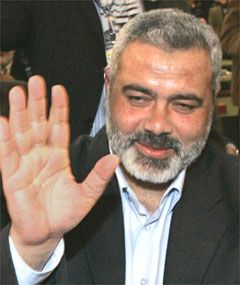 (as you know, the Palestinian prime minister is from Hamas and the president from Fatah). Last week there was the ghoulish episode of a prominent Fatah leader's children being murdered by gunmen outside their school. On Thursday, there seems to have been an attempt on the life of Ismail Haniyeh, the prime minister, with Haniyeh publicly accusing the senior Fatah figure Mohammed Dahlan of ordering the attack. Today President Mahmoud Abbas has called for joint elections to the parliament and presidency to resolve the political deadlock. Presumably he is assuming that in simultanaeous election the same side will win both elections, and hoping that he has the prestige to win these elections.
So - it is like the internal politics of the Palestinians, and the struggle between the competing legitimacies of the parliament and president is actually important to what is going on, with the failure to reconcile the prerogatives of the presidential and prime-ministerial offices a key driver of the malaise of Palestinian politics. Maybe it is time to dig up those books on semi-presidentialism.
Subscribe to:
Posts (Atom)

