You have probably heard about this "Israel Lobby" controversy. What happened was that Stephen Walt and John J. Mearsheimer, two American International Relations academics, wrote an article about the USA's tendency to support the most hawkish elements in the Israeli body politic. They saw this as being thanks to the influence of a powerful pro-Israel lobby in the USA. They furthermore asserted that this support for the Israeli right was detrimental to US interests (and, ultimately, to those of Israel). The authors of this article were not the usual leftist types, but theorists from the Realist school of International Relations. Their article let to predictable outrage.
Recently, President Obama proposed to appoint some guy called Charles Freeman to chair the US National Intelligence Council. Last week, however, Freeman withdrew his candidacy, citing a campaign of vilification against him by this Israel Lobby.
There is an interesting article in the Guardian by Jonathan Freedland on this incident: "Discard the mythology of 'the Israel Lobby', the reality is bad enough". Freedland is asserting that the Israel Lobby is not responsible for the near unconditional support that the USA gives to Israel. He is, however, doing it from a leftist perspective, and like Mearsheimer and Walt he sees the American support for Israel as ultimately malign. He does not deny the existence of a US lobby in favour of Israel (it would be hard to claim that the likes of AIPAC do not exist), but sees US support for Israel as being driven not by it but by self-interest – the self-interest of the USA's power-elite.
Freedland's article is interesting, and is a useful summary of the kind of argument he and others have advanced. It does have its problems, however. He creates something of a straw man out of Mearsheimer and Walt's argument, claiming that they see this Israel Lobby as omnipotent, when clearly they do not. Ironically, like many pro-Israeli opponents of Mearsheimer and Walt, Freedland seems also to casually conflate their idea of a powerful pro-Israel lobby with anti-semitic ideas of a sinister cabal of Zion's elders ruling the world. I am also unconvinced by his assertion that Israeli leaders were against the invasion of Iraq; I recall numerous Israeli commentators writing in the pages of Ha'aretz before the invasion, more or less asserting that anyone opposing the invasion was clearly an enemy of Israel.
At some stage of the game I will probably write more on different explanations offered for the obvious closeness between the USA and Israel, before going on to offer my own synthesis of them.
18 March, 2009


15 March, 2009
L'enfer, c'est les Australiens
 Australia's foreign minister Steven Smith is very concerned about recent events in Pakistan, in particular the attacks on the Sri Lankan cricket team.
"This was very much an existentialist threat to Pakistan itself," commented Mr Smith.
 The Pakistani authorities are reportedly on the lookout for gitanes and gauloises being smuggled in to the country's beret-wearing maniacs.
Hat-tip
image source one
image source two
Cast Lead Fail
You will recall that the Israeli state's recent campaign against Gaza was dubbed Operation Cast Lead, a name picked to denote how uncompromisingly brutal it would be for the Palestinians. Two months after the campaign ended, some people in Israel have started wondering whether Cast Lead achieved anything for them. Although death and destruction was meted out to the people of Gaza, it has not succeeded in its stated aim of halting the firing of rockets from Gaza into adjacent Israeli territory. The level of rocket fire now is down on what it was in late December; I suspect it is roughly comparable to what it would have been before the Israeli state repudiated the truce it had with Hamas by assassinating three of that party's activists back in November. It seems also that members of the Israeli public have started to register how badly the Gaza war has affected their country's image – it never really looks that good when your army tells people to shelter in a school and then fires tank shells at them.
What is both interesting and disturbing about all this is that anyone with half a brain could have predicted this outcome from the Gaza campaign – that Israel would fail to halt the rockets and would further erode its international standing. Whatever you think about the morality of their actions, there seems to be a lack of basic rationality on the part of many Israeli decision-makers. The Gaza campaign did not even succeed as a cynical attempt by the then government to buy popularity with the Israeli public. The decision to launch the Gaza campaign was taken by a government led by the Labour and Kadima parties, both of whom have been consigned to the opposition benches by the recent elections.
Israel's new ultra-right coalition has reputedly decided that for now the rockets from Gaza can be lived with. Minds are apparently being focussed on how the economic crisis is hitting Israel, making a repeat of Operation Cast Lead now rather unlikely. The new government of Binyamin Netanyahu, however, has not decided on a new pacific course of interaction with the country's neighbours. Instead, his leadership is reported to be planning a strike of some sort against Iran.
What is both interesting and disturbing about all this is that anyone with half a brain could have predicted this outcome from the Gaza campaign – that Israel would fail to halt the rockets and would further erode its international standing. Whatever you think about the morality of their actions, there seems to be a lack of basic rationality on the part of many Israeli decision-makers. The Gaza campaign did not even succeed as a cynical attempt by the then government to buy popularity with the Israeli public. The decision to launch the Gaza campaign was taken by a government led by the Labour and Kadima parties, both of whom have been consigned to the opposition benches by the recent elections.
Israel's new ultra-right coalition has reputedly decided that for now the rockets from Gaza can be lived with. Minds are apparently being focussed on how the economic crisis is hitting Israel, making a repeat of Operation Cast Lead now rather unlikely. The new government of Binyamin Netanyahu, however, has not decided on a new pacific course of interaction with the country's neighbours. Instead, his leadership is reported to be planning a strike of some sort against Iran.
17 February, 2009
Ireland: FAIL?
I have been meaning to write a bit about Ireland's current economic travails, for the benefit of my foreign readers, but I am finding the subject a bit too depressing. So instead, here are two cheering links:
Irish government faces growing fears of debt default (Guardian, yesterday)
Bank guarantee likely to deal a crippling blow to the economy (Irish Times, today)
Irish government faces growing fears of debt default (Guardian, yesterday)
Bank guarantee likely to deal a crippling blow to the economy (Irish Times, today)
12 February, 2009
Israel Election Latest!
Blah blah shift to the right, parliament as fragmented as country, parliament full of crazy parties, etc. Look it up in a news website, whatever.
The one thing I was a bit surprised to notice was that the Israelis seem to have stopped having direct elections for their prime minister. When did that happen? I took my eye off the ball on this one.
The one thing I was a bit surprised to notice was that the Israelis seem to have stopped having direct elections for their prime minister. When did that happen? I took my eye off the ball on this one.
06 February, 2009
Russia's faux semi-presidentialism
Russia is often lazily lumped in with semi-presidential countries, largely because it has a president and a prime minister. The model does not really fit. Dmitry Medvedev's assumption of the presidency was so managed by the country's elite that you cannot really call the president directly elected, while Prime Minister Vladimir Putin is only responsible to the Russian parliament in the most notional of senses. Meanwhile, state maintains a stranglehold on the media and journalists who criticise the regime have an unfortunate tendency die sudden and violent deaths. Russia is effectively an authoritarian regime with a semi-presidential façade.
Still, Russia has the trappings of a dual executive system, and there is always the possibility that the premiership and presidency could turn into rival centres of power. When Putin handed over the presidency to Medvedev and assumed the premiership, it was widely believed that he would remain the real master of Russia, with Medvedev acting as his puppet or the friendly face he could present to the world. Events seemed to support this interpretation, with Putin appearing to use the premiership as a way of ruling form the shadows.
 More recently, though, there have appeared what might be the first signs of a Putin-Medvedev split. Russia's economy has been hit hard by the collapse in oil prices, and without petrodollars to throw around the regime finds it harder to buy compliance. Russian cities have seen demonstrations recently, with angry people hit by the economic crisis taking to the streets. Perhaps in an effort to shore up his own position, Medvedev has made some statements that could be interpreted as criticism of his prime minister's response. In the more presidential of semi-presidential countries, presidents often seek to attach the blame for all regime failures to their premiers; this would have been normal when Putin or his predecessor were Russia's presidents. The prospect of a Putin-Medvedev split is interesting, though one should not assume that its victor would be Medvedev. Putin's power seems largely to come from his being Putin and from his personal control of the state security apparatus; that could easily trump Medvedev's mandate in a comedic election, unless Russia's leading figures decide that Putin has become a liability.
 The nascent Putin-Medvedev split could of course all be a charade, with the two pals merely playing good-cop bad-cop with the Russian people. The BBC, however, reports that there may be genuine differences emerging between the two. These differences are not primarily political, but musical. It appears that Russia's prime minister is a fan of Abba, recently flying in Abba tribute act Bjorn Again to play a private concert for himself, a mysterious and attractive young lady, and some of his cohorts (all at a trifling cost of £20,000). President Medvedev, however, is a keen fan of Deep Purple, last year enjoying them in concert at the 15th anniversary celebrations of Gazprom. Perhaps it was a fraught discussion on rockism that has brought forth tensions in the Putin-Medvedev partnership.
To follow all the latest Russian news, make sure to read Pravda.
images
Still, Russia has the trappings of a dual executive system, and there is always the possibility that the premiership and presidency could turn into rival centres of power. When Putin handed over the presidency to Medvedev and assumed the premiership, it was widely believed that he would remain the real master of Russia, with Medvedev acting as his puppet or the friendly face he could present to the world. Events seemed to support this interpretation, with Putin appearing to use the premiership as a way of ruling form the shadows.
 More recently, though, there have appeared what might be the first signs of a Putin-Medvedev split. Russia's economy has been hit hard by the collapse in oil prices, and without petrodollars to throw around the regime finds it harder to buy compliance. Russian cities have seen demonstrations recently, with angry people hit by the economic crisis taking to the streets. Perhaps in an effort to shore up his own position, Medvedev has made some statements that could be interpreted as criticism of his prime minister's response. In the more presidential of semi-presidential countries, presidents often seek to attach the blame for all regime failures to their premiers; this would have been normal when Putin or his predecessor were Russia's presidents. The prospect of a Putin-Medvedev split is interesting, though one should not assume that its victor would be Medvedev. Putin's power seems largely to come from his being Putin and from his personal control of the state security apparatus; that could easily trump Medvedev's mandate in a comedic election, unless Russia's leading figures decide that Putin has become a liability.
 The nascent Putin-Medvedev split could of course all be a charade, with the two pals merely playing good-cop bad-cop with the Russian people. The BBC, however, reports that there may be genuine differences emerging between the two. These differences are not primarily political, but musical. It appears that Russia's prime minister is a fan of Abba, recently flying in Abba tribute act Bjorn Again to play a private concert for himself, a mysterious and attractive young lady, and some of his cohorts (all at a trifling cost of £20,000). President Medvedev, however, is a keen fan of Deep Purple, last year enjoying them in concert at the 15th anniversary celebrations of Gazprom. Perhaps it was a fraught discussion on rockism that has brought forth tensions in the Putin-Medvedev partnership.
To follow all the latest Russian news, make sure to read Pravda.
images
02 February, 2009
Livni-Barak Fail
The latest Israeli opinion polls suggest that Binyamin Netanyahu and his Likud party are still on course to win the forthcoming elections in Israel. Ehud Barak (of Labour) and Tzipi Livni (of Kadima) seem to have reaped no obvious benefit from their Gaza war, despite the overwhelming support of the Israeli public for the strip's bombardment. This is not particularly surprising, as the results of the war have not been that great for the Israeli people. Not merely did the death and destruction meted out make Israel's elected leaders look like murderous psychopaths, but rockets are now still being fired from Gaza into Israel. Even in Israel's own terms, the Gaza war failed*.
There is a certain irony to Netanyahu coming into office like this (if he does indeed manage to win the election). In 1996, when he found himself elected to the Israeli premiership it was after another failed attempt by his incumbent opponents to bolster their popularity through extreme violence. In that case, it was Shimon Peres' "Grapes of Wrath" campaign of indiscriminate shelling against southern Lebanon that served as the prelude to Netanyahu's victory.
A Netanyahu premiership will prove interesting. He a right-winger and is likely to pursue an uncompromisingly hard line against all Palestinians (and, possibly, also against Syria and anyone else he takes exception to). That does not make him an unusual figure in Israeli politics. What makes him a bit more unusual is his forthright manner and his unwillingness to even verbally play ball with whatever waffle the Americans are currently pushing in the Middle East. Last time round, the Clinton administration was very glad to see the back of him. It will be fascinating to see how Netanyahu gets on with a new American president who seems interested in building bridges with the Arab World.
*not that Hamas can really claim much of a victory either – while they have managed to keep rockets firing out of the strip, it has happened at such a terrible human cost to their people that you would really have to wonder whether the time has come for them to change tactics
More: Israeli governing parties face poll battering amid Gaza scepticism (Guardian)
There is a certain irony to Netanyahu coming into office like this (if he does indeed manage to win the election). In 1996, when he found himself elected to the Israeli premiership it was after another failed attempt by his incumbent opponents to bolster their popularity through extreme violence. In that case, it was Shimon Peres' "Grapes of Wrath" campaign of indiscriminate shelling against southern Lebanon that served as the prelude to Netanyahu's victory.
A Netanyahu premiership will prove interesting. He a right-winger and is likely to pursue an uncompromisingly hard line against all Palestinians (and, possibly, also against Syria and anyone else he takes exception to). That does not make him an unusual figure in Israeli politics. What makes him a bit more unusual is his forthright manner and his unwillingness to even verbally play ball with whatever waffle the Americans are currently pushing in the Middle East. Last time round, the Clinton administration was very glad to see the back of him. It will be fascinating to see how Netanyahu gets on with a new American president who seems interested in building bridges with the Arab World.
*not that Hamas can really claim much of a victory either – while they have managed to keep rockets firing out of the strip, it has happened at such a terrible human cost to their people that you would really have to wonder whether the time has come for them to change tactics
More: Israeli governing parties face poll battering amid Gaza scepticism (Guardian)
31 January, 2009
EU to rescue Iceland?
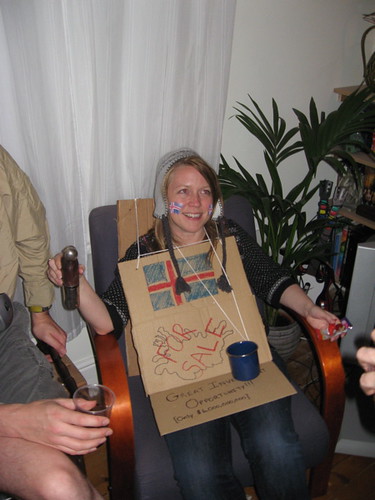
The Guardian reports that Iceland is to be fast-tracked for EU membership, and could become a full member of the European Union by 2011. Iceland's economy tanked last year. In the wake of the economic collapse, many people there reached the conclusion that their country was too small to sail alone through the stormy seas of the world economic crisis. EU membership, previously blocked by the country's political and economic elite, suddenly came to the top of the national agenda.
Now, why the EU is so eager to embrace Iceland is not quite so clear. Altruism is, obviously, a lofty motive, but there are many countries in the world (many countries even in Europe, broadly defined) whose struggling economies could be assisted by being allowed to join the EU. Prioritising Iceland's accession (after a long period in which the country was happy to remain outside the Union) could lead to the EU being seen as some kind of sugar daddy that will step in to rescue countries whose attempts to go it alone do not work out. That said, maybe taking in Iceland in like now would be good for the EU, as it shows potentially wayward members the dangers they could face if they go it alone.
That article also suggests that there is more support in Iceland for adopting the Euro than for full membership of the EU. People in the country's fishing industry are fearful of having to share their ever-dwindling country's fish stocks, and there are apparently the usual leftist anti-EU types in Iceland. These might prove strong enough to prevent the country signing up for EU accession. With regards to the Euro, people tend to assume that you have to be in the EU before you can adopt the currency. This is not actually the case. Montenegro adopted the Euro in the 1990s and is still only a candidate for EU membership. I think, though, that the EU does not really approve of non-member states adopting the Euro, and Iceland's adopting the currency now could complicate future accession negotiations.
image source
24 January, 2009
Whatever happened to the world food crisis?
There was a lot of stuff in the media last year about how food prices across the world were rising to unprecedented levels, with the result that many people could no longer afford to eat properly, or could only afford to eat by cutting back on luxuries like educating their children. I have not really heard anything about all this since last summer. So, has the world food crisis gone away? It strikes me as at least possible that rising food prices were driven by rising oil prices; with oil prices having peaked and collapsed, food prices may well have fallen to more affordable levels. Or maybe economic meltdown in the First World has made the media that bit less interested in the economic travails of the Third World poor. What do you think?
Lebanon Media Fail
Charles Malik reports that the Daily Star, Lebanon's English language newspaper (entirely unrelated to the British scandal sheet) has gone bankrupt and ceased publication. This might explain why their website has not been updated in over a week. The Daily Star will be missed by those who take an interest in Lebanese society and politics.
22 January, 2009
What is ETA for?
ETA are this militant group whose declared goal is independence for the Basque Country (a territory straddling the French and Spanish border, at the Western end of the Pyrenees). The Irish Times reported yesterday that they had killed Ignacio Uria Mendizabal, a 71 businessman whose company was involved in constructing a high speed rail-link out of the Basque Country. "We want to send a clear warning to engineers, technicians, managers and leaders of companies which take part in the works or have anything to do with them that they should suspend their work," ETA have apparently said. Transport links out of the Basque Country are apparently against the interests of the Basque people.
It is interesting how mental ETA seem to have become over the last number of years. During the Aznar premiership they seemed to be interested in a peace process of some sort, going on ceasefire for a bit, only for Aznar to laugh in their face. However, when the new Socialist prime minister Jose Luis Rodriguez Zapatero tried to engage in a dialogue with ETA, they decided not to play ball. ETA's continuing campaign of violence happens at a time when their power has been severely weakened, so it is easy to see their killing of sort targets like Mr Mendizabal as the mark of a sore loser. The mis-steps of the Spanish state may nevertheless have played a part in pushing ETA into mentalism. Political parties affiliated with ETA have consistently been banned for the thoughtcrime of supporting terrorism; by closing off any political avenue, the Spanish state has left things open for those who like killing people and blowing things up.
ETA have previously killed journalists for little more than disagreeing with them, so I would like to make clear that this post is largely based on an e-mail sent to me by my beloved, and may not reflect my actual opinions.
It is interesting how mental ETA seem to have become over the last number of years. During the Aznar premiership they seemed to be interested in a peace process of some sort, going on ceasefire for a bit, only for Aznar to laugh in their face. However, when the new Socialist prime minister Jose Luis Rodriguez Zapatero tried to engage in a dialogue with ETA, they decided not to play ball. ETA's continuing campaign of violence happens at a time when their power has been severely weakened, so it is easy to see their killing of sort targets like Mr Mendizabal as the mark of a sore loser. The mis-steps of the Spanish state may nevertheless have played a part in pushing ETA into mentalism. Political parties affiliated with ETA have consistently been banned for the thoughtcrime of supporting terrorism; by closing off any political avenue, the Spanish state has left things open for those who like killing people and blowing things up.
ETA have previously killed journalists for little more than disagreeing with them, so I would like to make clear that this post is largely based on an e-mail sent to me by my beloved, and may not reflect my actual opinions.
08 January, 2009
More Gaza meta
Here's an article in Ha'aretz by the outgoing Jerusalem correspondent of the Economist: Israel's PR war. He discusses why Israel is losing the propaganda war, reaching the astonishing conclusion that they are killing enormous numbers of people and not really giving the impression of doing so for any reason other than jockeying for power between Israeli politics and a general tendency to resort to extreme violence when unsure what to do.
Hamas secrets of Barack Obama
The Guardian reports that Barack Obama is going to establish secret backdoor channels of communication with Hamas, in a startling break with previous US leaders' policy of total ostracism of the popular Palestinian Islamist party: Obama camp 'prepared to talk to Hamas'. Obviously, these secret backdoor channels are a bit less secret now that Obama "sources" are reputedly telling the Guardian all about them, but I imagine that any links will be tentative and covert for some time yet - don't expect to see Ismail Haniyeh (the Palestinian Authority's de jure prime minister) or Hamas' exiled leader Khaled Meshal invited to the White House any time soon.
I'm curious as to whether this means that all the right-wingers in the USA and Israel were right to fear the election of Barack Obama. From their perspective, having any kind of non-violent interaction with Hamas represents a terrifying concession to the most sinister of forces. Aside from being an obviously sensible course of action, even tentative US engagement with Hamas may also prove an annoyance to those who predicted that no change whatsoever would ever result from a change in US leadership.
I'm curious as to whether this means that all the right-wingers in the USA and Israel were right to fear the election of Barack Obama. From their perspective, having any kind of non-violent interaction with Hamas represents a terrifying concession to the most sinister of forces. Aside from being an obviously sensible course of action, even tentative US engagement with Hamas may also prove an annoyance to those who predicted that no change whatsoever would ever result from a change in US leadership.
07 January, 2009
Meta Gaza
Chris Gilmour links to some blogs written from within Gaza: Gazablog Roundup
Peter Preston, writing in the Guardian, talks about the US print media's coverage of Israel's Gaza offensive: Israel barks, the US media wags its tail
Marc Lynch, writing as Abu Aardvark*, talks about how the Arabic language media is covering the crisis (and other stuff): 'Gaza' or 'Hamas' and Israel, Gaza, and Arab regional divisions
*a Cerebus reference, obv.
Peter Preston, writing in the Guardian, talks about the US print media's coverage of Israel's Gaza offensive: Israel barks, the US media wags its tail
Marc Lynch, writing as Abu Aardvark*, talks about how the Arabic language media is covering the crisis (and other stuff): 'Gaza' or 'Hamas' and Israel, Gaza, and Arab regional divisions
*a Cerebus reference, obv.
04 January, 2009
Link action
I have added a few new links. See if you can guess which ones they are.
At some stage I will divide up the links into blogs and non-blogs, and purge the blog ones that have not been updated for ages.
At some stage I will divide up the links into blogs and non-blogs, and purge the blog ones that have not been updated for ages.
03 January, 2009

01 January, 2009
Ethiopian Government very serious about democracy
 Back in 2005, Ethiopia held elections. Until the polls closed, everyone was very impressed with how free and fair everything was. However, many people smelled a rat when the ruling EPRDF party announced that had won five minutes after the end of voting. Street protests erupted in areas where the opposition was strong, especially in Addis Ababa, the capital. The authorities crushed these in the most uncompromising manner. They also threw the entire opposition into jail, only releasing them when they signed documents accepting the blame for the riots that had followed the election results.
Now the Ethiopian authorities have thrown Birtukan Medeksa, a leading opposition figure, back into jail. Ms Birtukan had apparently given an interview saying that she had been released from jail in 2006 not because she accepted responsibility for the riots but through secret negotiations between the government and opposition. She is now serving a life sentence, for treason.
Image source (and more information on Ms Birtukan's arrest and Ethiopian politics generally)
31 December, 2008
Why is Gaza so overcrowded?
These days I find a lot of Robert Fisk's writing a bit overwrought, but he makes a good point in an article yesterday in the Independent ('Why bombing Ashkelon is the most tragic irony'): that when rockets are fired from Gaza to the Israeli town in Ashkelon, they are landing on the town many Gazans (or their parents, or grandparents) are from. Gaza is not naturally one of the world's most heavily populated places, but became so after Palestinian refugees found themselves stuck there when the state of Israel was established.
I understand that when Israel was admitted to the United Nations in the 1950s, one condition was that it was to allow the return of those who became refugees in the 1948-49 war. I also understand that this condition was not met.
I understand that when Israel was admitted to the United Nations in the 1950s, one condition was that it was to allow the return of those who became refugees in the 1948-49 war. I also understand that this condition was not met.
30 December, 2008
Samuel Huntington
I will return to Israel and Palestine shortly, but first a few words on the late Samuel Huntington, who died on Christmas Eve. Huntington enjoyed a long career as a political scientist and intellectual Cold Warrior, writing The Third Wave, an interesting-sounding book on democratisation. In later years, he was best known for writing The Clash of Civilisations, first as an article in Foreign Affairs and then as a book. The timing of this work was interesting – it appeared in 1993, when the western world was still somewhat basking in the warm fuzzy glow that followed victory in the Cold War, with Francis Fukuyama's vision of history ending in a glorious and peaceful liberal future capturing something of the zeitgeist. Huntington rejected Fukuyama's optimism, foreseeing the future as one of conflict. His idea, crudely summarised (I have not actually read the article or book) is that the world is divided up into civilisations. Some of these civilisations are capable of relatively friendly interaction with the others, but some of them (notably the Muslim World and China*) are naturally going to want to engage with our civilisation in bloody conflict. Huntington's policy prescriptions are simple enough – those civilisations must be contained, and people from them should not be allowed into our countries unless they have been purged of their foreign ways.
I gather that for much of the 1990s, Huntington's ideas served to provide some intellectual backing for those who fancied a new Cold War with China. After 9-11, however, Huntington's ideas suddenly found a new audience. It suddenly became a lot more credible to say that there are people out there who are not like us and who hate us for what we are. Huntington's ideas may be a bit facile, but they were arguably the intellectual framework behind the War on Terror.
Huntington's death seems not to have attracted as much notice as might be expected. This could, perhaps, be a sign that his influenced has waned and the world is now embracing more sophisticated and nuanced analysis of world affairs. Or maybe I look at the wrong news sources.
Some links:
Wikipedia entry on Samuel Huntington
Telegraph obituary
Conservapedia entry on Samuel Huntington
I gather that for much of the 1990s, Huntington's ideas served to provide some intellectual backing for those who fancied a new Cold War with China. After 9-11, however, Huntington's ideas suddenly found a new audience. It suddenly became a lot more credible to say that there are people out there who are not like us and who hate us for what we are. Huntington's ideas may be a bit facile, but they were arguably the intellectual framework behind the War on Terror.
Huntington's death seems not to have attracted as much notice as might be expected. This could, perhaps, be a sign that his influenced has waned and the world is now embracing more sophisticated and nuanced analysis of world affairs. Or maybe I look at the wrong news sources.
Some links:
Wikipedia entry on Samuel Huntington
Telegraph obituary
Conservapedia entry on Samuel Huntington
28 December, 2008
What exactly is war good for?
If you've seen the news, you will be aware that Israel has launched an air offensive agains the Gaza Strip of unprecedented ferocity. There are reports of about 280 people killed and over 700 wounded. While many of these are members of the Hamas-controlled security services in Gaza, the BBC quotes reports that a third of the casualties are civilians. The Israeli leadership is talking about continuing and widening their air strikes, and seem to be suggesting that a ground offensive is on the cards. Meanwhile, one Israeli has been killed by rockets fired by Palestinian militants from the Gaza Strip.
So, what is this all about? There had been a ceasefire between Israel and Hamas in Gaza. The ceasefire had always been a bit shaky, and it came to an end before Christmas. Hamas cited Israel's failure to lift the siege of Gaza and its unwillingness to extend the truce to the West Bank, while Israel cited Hamas' failure to prevent the rockets being fired from Gaza at Israeli border towns and lack of progress on freeing Gilad Shalit (an Israeli soldier captured by Hamas in 2006).
Israeli forces have a tendency to lash out blindly, and this time is no exception. It is very difficult to see what exactly they are trying to achieve with this latest offensive. They would, obviously, like to stop Hamas and other Palestinian groups from using Gaza as a base to fire rockets into Israel, but on previous form no amount of air raids will accomplish that. They might get more results from launching a ground offensive into Gaza, but that could easily lead to an Armageddon-like battle in which enormous numbers of Palestinian civilians (and sizeable numbers of Israeli soldiers and Hamas cadres) are killed. Even with that, the rocket fire into Israel would be likely to resume once the Israelis withdraw, while a permanent occupation of Gaza would be regarded as a Fail by Israel. It does look a bit like the Israelis might be repeating the mistakes of 2006, by launching a war that they cannot win and that will make them look to the world like total cockfarmers.
That Clausewitz guy began his famous book by saying that war is a continuation of politics by other means. He meant interstate politics (or political struggles between princes, given the times in which he lived). But it is often striking how wars can result from the internal politics of countries. Israel is holding an election in barely a month's time. Binyamin Netanyahu, the loathsome former prime minister who essentially killed the Oslo process, was riding high in the polls with his promise to stop Hamas. It seems like the leaders of the current government have decided to act tough to try and undercut Netanyahu, and it is the Palestinians who are picking up the tab for the government's attempt to regain electoral support.
At the same time, one could ask what exactly Hamas are hoping to achieve by firing rockets at Israeli civilians. At one level, there is something a bit symbolic about Hamas' rockets – they hardly ever hit anything and serve mainly to say "We're still here!". But they are being fired at Israeli civilians, and they do occasionally kill them. From Hamas' point of view, one could see the rocket campaign as an attempt to force Israel to the negotiating table, by imposing a rough balance of terror. However, this has failed; the rocket campaign has instead united Israelis behind ever more draconian (and irrational) policies. I suspect that the main targets of the Hamas rocket campaign are actually the Palestinians. The rockets are meant to show Palestinians that it is Hamas, and not the waster quislings in Fatah, who are taking the fight to the Israelis.
That said, one has to be wary of making any kind of moral equivalence between Hamas and Israel. Israel is the power besieging Gaza (with the kind assistance of Egypt). The balance of forces between Israel and Hamas is tilted so in the former's favour that it is more or less inevitable that any Hamas retaliation to Israel's siege will be made against Israeli civilians. The leaders of Hamas should nevertheless ask themselves whether ineffectually trying to kill Israeli civilians is actually that likely to raise the siege of Gaza.
Some links:
Israel renews air strikes on Gaza (BBC)
Israel's mixed motives for strikes (BBC)
To be in Gaza is to be trapped (Guardian)
So, what is this all about? There had been a ceasefire between Israel and Hamas in Gaza. The ceasefire had always been a bit shaky, and it came to an end before Christmas. Hamas cited Israel's failure to lift the siege of Gaza and its unwillingness to extend the truce to the West Bank, while Israel cited Hamas' failure to prevent the rockets being fired from Gaza at Israeli border towns and lack of progress on freeing Gilad Shalit (an Israeli soldier captured by Hamas in 2006).
Israeli forces have a tendency to lash out blindly, and this time is no exception. It is very difficult to see what exactly they are trying to achieve with this latest offensive. They would, obviously, like to stop Hamas and other Palestinian groups from using Gaza as a base to fire rockets into Israel, but on previous form no amount of air raids will accomplish that. They might get more results from launching a ground offensive into Gaza, but that could easily lead to an Armageddon-like battle in which enormous numbers of Palestinian civilians (and sizeable numbers of Israeli soldiers and Hamas cadres) are killed. Even with that, the rocket fire into Israel would be likely to resume once the Israelis withdraw, while a permanent occupation of Gaza would be regarded as a Fail by Israel. It does look a bit like the Israelis might be repeating the mistakes of 2006, by launching a war that they cannot win and that will make them look to the world like total cockfarmers.
That Clausewitz guy began his famous book by saying that war is a continuation of politics by other means. He meant interstate politics (or political struggles between princes, given the times in which he lived). But it is often striking how wars can result from the internal politics of countries. Israel is holding an election in barely a month's time. Binyamin Netanyahu, the loathsome former prime minister who essentially killed the Oslo process, was riding high in the polls with his promise to stop Hamas. It seems like the leaders of the current government have decided to act tough to try and undercut Netanyahu, and it is the Palestinians who are picking up the tab for the government's attempt to regain electoral support.
At the same time, one could ask what exactly Hamas are hoping to achieve by firing rockets at Israeli civilians. At one level, there is something a bit symbolic about Hamas' rockets – they hardly ever hit anything and serve mainly to say "We're still here!". But they are being fired at Israeli civilians, and they do occasionally kill them. From Hamas' point of view, one could see the rocket campaign as an attempt to force Israel to the negotiating table, by imposing a rough balance of terror. However, this has failed; the rocket campaign has instead united Israelis behind ever more draconian (and irrational) policies. I suspect that the main targets of the Hamas rocket campaign are actually the Palestinians. The rockets are meant to show Palestinians that it is Hamas, and not the waster quislings in Fatah, who are taking the fight to the Israelis.
That said, one has to be wary of making any kind of moral equivalence between Hamas and Israel. Israel is the power besieging Gaza (with the kind assistance of Egypt). The balance of forces between Israel and Hamas is tilted so in the former's favour that it is more or less inevitable that any Hamas retaliation to Israel's siege will be made against Israeli civilians. The leaders of Hamas should nevertheless ask themselves whether ineffectually trying to kill Israeli civilians is actually that likely to raise the siege of Gaza.
Some links:
Israel renews air strikes on Gaza (BBC)
Israel's mixed motives for strikes (BBC)
To be in Gaza is to be trapped (Guardian)
27 December, 2008
Contextualising "Waltz with Bashir"
Have you seen the film Waltz with Bashir? It is an animated film, directed by Ari Folman, in which he investigates his own inability to remember anything of the Israeli invasion of Lebanon in 1982. As a conscript in the Israel's army, he was a participant in those events, but somehow the things he had seen and done were blanked from his memory.
One striking feature of the film is how little context it gives to the events it describes. Its focus is on the experiences of the director and the other Israeli veterans of the war he talks to, not on the big picture of the conflict. I found this quite refreshing. If, like me. you are a bit over-engaged with the politics of the Middle East then the film is a useful corrective, a reminder that there are human stories and human tragedies behind the region's military and political conflicts. People who are not so familiar with the events the film describes may however have found themselves wondering about how they came to pass. As a service to such people, I will now briefly give some background to the film; this is all stuff you could find out yourself, but maybe you would rather I did it for you.
In the 1970s, Lebanon erupted into civil war. This saw armed parties representing the country's Maronite Christians ranged against militias of Lebanon's various Muslim religious communities, with the latter allied with the Palestine Liberation Organisation's fighters who were at that point based in Lebanon. The Lebanese civil war saw many episodes of extreme savagery, with each side's fighters often happier to lay into civilians than engage the enemy in actual combat.
The Bashir of the film's title is one Bashir Gemayel, a Maronite Christian and leader of the Phalange militia. Gemayel's goals were to establish himself as the pre-eminent political leader of the Maronites, to maintain the political hegemony of the Maronites generally, and to crush the Palestinian fighters who had established a virtual state-within-a-state in Lebanon. He was successful in his first goal (largely by applying extreme violence to any other Maronite barons who dared stand against him), but in his wider goals he was less successful. Staring defeat in the face, Bashir appealed first to neighbouring Syria, which obliged by sending a peace-keeping force to contain the Palestinians and the Muslim militias. Before too long, however, Bashir found the Syrian embrace suffocating, and he began to court Israel, Lebanon's neighbour to the south.
The Israeli state had an obvious interest in Lebanon, as Palestinian groups were using it as a base for attacks against it. Israel had briefly invaded southern Lebanon in 1978, but Bashir Gemayel offered them the prospect of purging Lebanon of the Palestinian menace and turning the country into a friendly client state. By 1982, however, the Israel-Lebanon border was relatively quiet. The Syrians were anxious to prevent the Palestinians from stirring up trouble with Israel, and Yassir Arafats' PLO was observing a truce along the border.
Bizarrely, events in London triggered the events depicted in Waltz with Bashir. Palestinian gunmen attempted to assassinate Israel's ambassador outside the Dorchester hotel. Although the fringe group who carried out the attack was based in Iraq, the Israelis retaliated by bombing Palestinian targets in Lebanon. Somewhat unsurprisingly, the PLO responded by firing rockets over the border, and the Israelis launched a full-scale invasion of Lebanon.
At the time, Ariel Sharon was Israel's defence minister. Other members of the Israeli government have said that he promised them that the invasion would be brief, and that conflict with the Syrians would be avoided. However, the Israeli army pushed north towards Beirut and seems to have actively sought conflict with Syrian forces. While the Palestinians and Syrians did fight back, Israel's near total command of the air meant that the fighting was a bit one-sided (though the Israeli air force made sporting attempts to even the odds by occasionally bombing Israeli troops). Once the Israelis reached Beirut, however, they stopped. Moving into Muslim West Beirut, where the PLO was based, was likely to involve unacceptable levels of casualties, given the Palestinians skill at urban warfare. Instead, the Israelis intensively bombed West Beirut, while blockading it from land and sea.
The siege was broken by the USA and other leading western countries. They persuaded the Israelis to allow the evacuation to Tunisia of Palestinian fighters (but not civilians). With this, the war seemed over. The Lebanese parliament met to elect a new president for the country, and chose Bashir Gemayel. His election was assisted by the Israeli army, which prevented MPs who did not support his candidacy from attending.
However, before he could take office, Bashir Gemayel was killed in a car bomb attack. His murder is usually attributed to Syrian military intelligence (like many other car bombs that have killed politicians who have opposed Syrian interests), though Bashir had a lot of enemies, all of whom have been accused of his murder (as indeed have the Israelis, who were reputedly finding him less pliant than had been hoped). At the time, though, his Phalangist militia blamed the Palestinians for his death, and their blood was up for revenge.
The Israeli army moved into West Beirut, surrounding the Palestinian camps of Sabra and Chatila. The Phalange was allowed into the camps to search for and eliminate terrorists. To assist them in their work, the Israelis prevented Palestinians from leaving the camps; at night, they fired flares over the camps so that the Phalange could continue their work around the clock. The Phalangists were only pulled back when the international media started reporting that they were massacring Palestinian civilians. By that stage, hundreds, or a couple of thousand, Palestinians had been exterminated.
As far as I know, no one has ever been punished judicially for their role in the massacres. A public backlash in Israel forced the resignation of the country's prime minister, and the political career of Arial Sharon was temporarily suspended. None of the Phalangists who carried out the murders ever faced legal justice, while the commander who led the massacres subsequently became a semi-respectable politician (before himself dying in a mysterious car bomb explosion).
One striking feature of the film is how little context it gives to the events it describes. Its focus is on the experiences of the director and the other Israeli veterans of the war he talks to, not on the big picture of the conflict. I found this quite refreshing. If, like me. you are a bit over-engaged with the politics of the Middle East then the film is a useful corrective, a reminder that there are human stories and human tragedies behind the region's military and political conflicts. People who are not so familiar with the events the film describes may however have found themselves wondering about how they came to pass. As a service to such people, I will now briefly give some background to the film; this is all stuff you could find out yourself, but maybe you would rather I did it for you.
The Bashir of the film's title is one Bashir Gemayel, a Maronite Christian and leader of the Phalange militia. Gemayel's goals were to establish himself as the pre-eminent political leader of the Maronites, to maintain the political hegemony of the Maronites generally, and to crush the Palestinian fighters who had established a virtual state-within-a-state in Lebanon. He was successful in his first goal (largely by applying extreme violence to any other Maronite barons who dared stand against him), but in his wider goals he was less successful. Staring defeat in the face, Bashir appealed first to neighbouring Syria, which obliged by sending a peace-keeping force to contain the Palestinians and the Muslim militias. Before too long, however, Bashir found the Syrian embrace suffocating, and he began to court Israel, Lebanon's neighbour to the south.
The Israeli state had an obvious interest in Lebanon, as Palestinian groups were using it as a base for attacks against it. Israel had briefly invaded southern Lebanon in 1978, but Bashir Gemayel offered them the prospect of purging Lebanon of the Palestinian menace and turning the country into a friendly client state. By 1982, however, the Israel-Lebanon border was relatively quiet. The Syrians were anxious to prevent the Palestinians from stirring up trouble with Israel, and Yassir Arafats' PLO was observing a truce along the border.
Bizarrely, events in London triggered the events depicted in Waltz with Bashir. Palestinian gunmen attempted to assassinate Israel's ambassador outside the Dorchester hotel. Although the fringe group who carried out the attack was based in Iraq, the Israelis retaliated by bombing Palestinian targets in Lebanon. Somewhat unsurprisingly, the PLO responded by firing rockets over the border, and the Israelis launched a full-scale invasion of Lebanon.
At the time, Ariel Sharon was Israel's defence minister. Other members of the Israeli government have said that he promised them that the invasion would be brief, and that conflict with the Syrians would be avoided. However, the Israeli army pushed north towards Beirut and seems to have actively sought conflict with Syrian forces. While the Palestinians and Syrians did fight back, Israel's near total command of the air meant that the fighting was a bit one-sided (though the Israeli air force made sporting attempts to even the odds by occasionally bombing Israeli troops). Once the Israelis reached Beirut, however, they stopped. Moving into Muslim West Beirut, where the PLO was based, was likely to involve unacceptable levels of casualties, given the Palestinians skill at urban warfare. Instead, the Israelis intensively bombed West Beirut, while blockading it from land and sea.
The siege was broken by the USA and other leading western countries. They persuaded the Israelis to allow the evacuation to Tunisia of Palestinian fighters (but not civilians). With this, the war seemed over. The Lebanese parliament met to elect a new president for the country, and chose Bashir Gemayel. His election was assisted by the Israeli army, which prevented MPs who did not support his candidacy from attending.
However, before he could take office, Bashir Gemayel was killed in a car bomb attack. His murder is usually attributed to Syrian military intelligence (like many other car bombs that have killed politicians who have opposed Syrian interests), though Bashir had a lot of enemies, all of whom have been accused of his murder (as indeed have the Israelis, who were reputedly finding him less pliant than had been hoped). At the time, though, his Phalangist militia blamed the Palestinians for his death, and their blood was up for revenge.
The Israeli army moved into West Beirut, surrounding the Palestinian camps of Sabra and Chatila. The Phalange was allowed into the camps to search for and eliminate terrorists. To assist them in their work, the Israelis prevented Palestinians from leaving the camps; at night, they fired flares over the camps so that the Phalange could continue their work around the clock. The Phalangists were only pulled back when the international media started reporting that they were massacring Palestinian civilians. By that stage, hundreds, or a couple of thousand, Palestinians had been exterminated.
As far as I know, no one has ever been punished judicially for their role in the massacres. A public backlash in Israel forced the resignation of the country's prime minister, and the political career of Arial Sharon was temporarily suspended. None of the Phalangists who carried out the murders ever faced legal justice, while the commander who led the massacres subsequently became a semi-respectable politician (before himself dying in a mysterious car bomb explosion).
21 December, 2008
Remembering Conor Cruise O'Brien
You may have heard about Conor Cruise O'Brien dying. He was this Irish polymath who seems to have been involved in everything possible over the course of his long life. For people my age or younger, the crankish positions he adopted in later life largely overshadowed the rest of his life, so his obituary on the BBC website is a welcome corrective, bringing back into view his astonishing achievements in various fields of endeavour. It does however focus more on his international achievements, so it misses what he might end up being most remembered for in Ireland - coining the acronym GUBU (Grotesque, Unprecedented, Bizarre, and Unbelieveable) in 1982 to describe the then Taoiseach, Charles Haughey.
One thing that is striking about O'Brien is how he seemed to move from the left to the right over the course of his life. While involved in the Congo as a UN representative he played a major part in combating and exposing the destablisation of that country by western powers hostile to Patrice Lumumba, its post-independence leader. He also played a major part in exposing some international students union organisation as being under the control of the CIA. In later life, though, he turned into something a of a reactionary. He become a leading apologist for the Israeli state and an opponent of Palestinian aspirations. I recall him being rather less opposed to the apartheid regime in South Africa than might have been expected from the former scourge of imperialism. In Irish politics, he moved beyond mere opposition to militant Irish nationalism to a kind of embedded pessimism on Northern Ireland, where any attempt at political engagement was seen by him as a step on the road to intercommunal Armageddon.
I suspect it was O'Brien's period in government in the 1970s that caused the apparent shift in his political outlook. By that stage, he had moved beyond the Irish nationalism and was uncompromising in his opposition to the IRA and militant Irish nationalists. He, perhaps not unreasonably, saw those people as a dangerous and intrinsically undemocratic armed minority intent on subverting and overthrowing the constitutional order in Irish politics. Looking at who the IRA was palling with internationally, and what other causes were being espoused by those sympathetic to it, might well have made him reject all radicalism and move instead to supporting more establishment causes.
That is just supposition on my part. What is beyond dispute is the extent to which O'Brien managed to pack several lifetimes of achievement into his allotted span. He seems so much bigger and more active than the people who have succeeded him.
One thing that is striking about O'Brien is how he seemed to move from the left to the right over the course of his life. While involved in the Congo as a UN representative he played a major part in combating and exposing the destablisation of that country by western powers hostile to Patrice Lumumba, its post-independence leader. He also played a major part in exposing some international students union organisation as being under the control of the CIA. In later life, though, he turned into something a of a reactionary. He become a leading apologist for the Israeli state and an opponent of Palestinian aspirations. I recall him being rather less opposed to the apartheid regime in South Africa than might have been expected from the former scourge of imperialism. In Irish politics, he moved beyond mere opposition to militant Irish nationalism to a kind of embedded pessimism on Northern Ireland, where any attempt at political engagement was seen by him as a step on the road to intercommunal Armageddon.
I suspect it was O'Brien's period in government in the 1970s that caused the apparent shift in his political outlook. By that stage, he had moved beyond the Irish nationalism and was uncompromising in his opposition to the IRA and militant Irish nationalists. He, perhaps not unreasonably, saw those people as a dangerous and intrinsically undemocratic armed minority intent on subverting and overthrowing the constitutional order in Irish politics. Looking at who the IRA was palling with internationally, and what other causes were being espoused by those sympathetic to it, might well have made him reject all radicalism and move instead to supporting more establishment causes.
That is just supposition on my part. What is beyond dispute is the extent to which O'Brien managed to pack several lifetimes of achievement into his allotted span. He seems so much bigger and more active than the people who have succeeded him.
26 November, 2008
Off Message
A former ambassador of Georgia to Russia, Mr Erosi Kitsmarishvili, has caused consternation in Georgia by claiming to a parliamentary inquiry that Georgia started the recent war with Russia. The controversy caused by his comments is somewhat unusual, given that Georgia appears to have actually started the war (by launching an invasion of the breakaway region of South Ossetia, accompanied by indiscriminate shelling and murders of Ossetian civilians).
More
More
22 November, 2008
"We try to draw the line at outrageous things, and this is sort of one of them."
In 2007, Conrad Black was convicted of defrauding the company he headed of US$ 6,100,000 (STR£4,000,000) and of obstructing the course of justice. He is serving a six year sentence in a US jail.
Mr Black is in the news again because he is asking George W. Bush to pardon him before he leaves the White House. Pardoning shady characters is a traditional act of outgoing presidents keen to piss on their legacy; in Bush's case, he does not even have a legacy to piss on, so there must be a great many shifty crims hoping for a pardon by the end of January.
One astonishing feature of Mr Black's appeal for clemency is that his lawyers have submitted legal bills relating to it to his former company - the victim of his crimes. An unnamed spokesperson from the company supplied the above quote.
More
Mr Black is in the news again because he is asking George W. Bush to pardon him before he leaves the White House. Pardoning shady characters is a traditional act of outgoing presidents keen to piss on their legacy; in Bush's case, he does not even have a legacy to piss on, so there must be a great many shifty crims hoping for a pardon by the end of January.
One astonishing feature of Mr Black's appeal for clemency is that his lawyers have submitted legal bills relating to it to his former company - the victim of his crimes. An unnamed spokesperson from the company supplied the above quote.
More
When Post-Modernism Goes Bad
I was at an interesting talk the other night to launch the book Thinking Palestine*, a collection of essays based on papers delivered at that conference on the Palestinian "state of exception" I was at a while back. I will discuss the talk and the book in more detail later, but first an anecdote. Ronit Lentin, the editor of the book, mentioned a piece by Eyal Weizman, in which he discussed how some Israeli army training centre has taken on some crazy post-structuralist academics. The use of post-modernist and post-structuralist ideas in army training is apparently part of a whole new paradigm in urban warfare tactics the Israelis have been developing. After graduating from their course, the Israeli soldiers apply their post-structuralist ideas in a somewhat over-literal manner, deconstructing Palestinian houses by driving tanks through them.
As previously noted, elements of the Bush administration have also evinced a certain fondness for weirdo post-modernist ideas.
*Ronit Lentin (ed) (2008). Thinking Palestine. London: Zed Books
As previously noted, elements of the Bush administration have also evinced a certain fondness for weirdo post-modernist ideas.
*Ronit Lentin (ed) (2008). Thinking Palestine. London: Zed Books
16 November, 2008
Jerusalem Votes
Jerusalem held mayoral elections last week. An article from last Saturday in the Financial Times profiles the candidates. One odd thing about the election was that none of Israel's main political parties bothered putting up a candidate for the top job in the country's official capital. This reflects the extent to which the city has moved to the margins of the country's life, something that seems to only have happened over the last decade or so. Teddy Kolleck, Jerusalem's mayor from 1965 to 1993, was a prominent world figure, while Ehud Olmert (still, just about, prime minister of Israel) used the mayoralty as his springboard to the top job. Now, though, the mayoral elections are the province of eccentrics and personality candidates.
The rise of the religious right in Israel may be a factor in the decline in importance of the city. The ultra-orthodox are increasingly prominent in Jerusalem, and their ascendancy has led to many secular or moderately religious Israelis leaving the city. The city has become less and less a place of commerce or intellectual activity, and more and more a devotional centre. Another factor might be the city's relative isolation from the coastal strip that is the effective core of the Israeli state. Such things are relative (you could probably drive from Tel Aviv to Jerusalem in an hour), but its physical position might engender a certain detachment from its day to day concerns.
One thing I was struck by in that Financial Times article was how the only candidate who, to me, seemed to talk any kind of sense was Dan Biron, running on the marijuana-legalisation platform. Aside from his cannabis decriminalisation policies, he had some other crazy policies – like having public transport run on the Sabbath. No one voted for him, however, because unlike all the other candidates he did not spend his time shiteing on about how Jerusalem must remain the eternal undivided capital of Israel. That points to another odd feature of Jerusalem – its divided nature. When I visited the city, I was staying just outside the Old City, near the Damascus gate. That part of the city is very Palestinian. Apart from the Israeli soldiers and the occasional ultra-orthodox Jew in the immediate vicinity of the gate, you could be in any middle-eastern city. But if you walked for 25 minutes you would be in the down-town area of West Jerusalem. Apart from the occasional ultra-orthodox Jew, the fact that every second person was carrying a machine gun, and the security checks at the entrances to everything, you could be in any city in Western Europe. The two parts of the city have almost no interaction with each other, apart from the occasional eviction of Palestinians to make way for a new Israeli settlement. However, the fictional unity of the city is a core value in Israeli politics.
Jerusalem's Palestinians largely do not vote in Israeli elections. In fairness to the Israelis, they have extended notional voting rights to the city's Palestinian residents, but most Palestinians refuse to exercise these. The feeling is that to vote in Israeli elections would somehow legitimise Israeli occupation of East Jerusalem. I feel that this is a somewhat quixotic position, and it might well contribute to the general neglect of the Palestinian east by the municipal authorities. Politicians ignore people who don't vote, while a voting Palestinian public might just be able to form alliances with some of the city's Israeli politicians and set its government on a less nakedly sectarian course. As is, the elections largely reflected the divisions within West Jerusalem that pit the ultra-orthodox Jews against their secular and moderately religious fellow citizens.
In the end, Jerusalem's voters chose Nir Barkat as their mayor. He comes from the secular side of Israel's divide, but is uncompromising in his support for Jerusalem remaining under Israeli rule. He promises to expand Israeli settlements in East Jerusalem, presumably evicting more Palestinians in the process.
More:
Profile: Nir Barkat (BBC)
Holy City facing splits and decline (BBC)
Ultra-Orthodox pitted against secular Jews in Jerusalem's mayoral election (Guardian)
The rise of the religious right in Israel may be a factor in the decline in importance of the city. The ultra-orthodox are increasingly prominent in Jerusalem, and their ascendancy has led to many secular or moderately religious Israelis leaving the city. The city has become less and less a place of commerce or intellectual activity, and more and more a devotional centre. Another factor might be the city's relative isolation from the coastal strip that is the effective core of the Israeli state. Such things are relative (you could probably drive from Tel Aviv to Jerusalem in an hour), but its physical position might engender a certain detachment from its day to day concerns.
One thing I was struck by in that Financial Times article was how the only candidate who, to me, seemed to talk any kind of sense was Dan Biron, running on the marijuana-legalisation platform. Aside from his cannabis decriminalisation policies, he had some other crazy policies – like having public transport run on the Sabbath. No one voted for him, however, because unlike all the other candidates he did not spend his time shiteing on about how Jerusalem must remain the eternal undivided capital of Israel. That points to another odd feature of Jerusalem – its divided nature. When I visited the city, I was staying just outside the Old City, near the Damascus gate. That part of the city is very Palestinian. Apart from the Israeli soldiers and the occasional ultra-orthodox Jew in the immediate vicinity of the gate, you could be in any middle-eastern city. But if you walked for 25 minutes you would be in the down-town area of West Jerusalem. Apart from the occasional ultra-orthodox Jew, the fact that every second person was carrying a machine gun, and the security checks at the entrances to everything, you could be in any city in Western Europe. The two parts of the city have almost no interaction with each other, apart from the occasional eviction of Palestinians to make way for a new Israeli settlement. However, the fictional unity of the city is a core value in Israeli politics.
Jerusalem's Palestinians largely do not vote in Israeli elections. In fairness to the Israelis, they have extended notional voting rights to the city's Palestinian residents, but most Palestinians refuse to exercise these. The feeling is that to vote in Israeli elections would somehow legitimise Israeli occupation of East Jerusalem. I feel that this is a somewhat quixotic position, and it might well contribute to the general neglect of the Palestinian east by the municipal authorities. Politicians ignore people who don't vote, while a voting Palestinian public might just be able to form alliances with some of the city's Israeli politicians and set its government on a less nakedly sectarian course. As is, the elections largely reflected the divisions within West Jerusalem that pit the ultra-orthodox Jews against their secular and moderately religious fellow citizens.
In the end, Jerusalem's voters chose Nir Barkat as their mayor. He comes from the secular side of Israel's divide, but is uncompromising in his support for Jerusalem remaining under Israeli rule. He promises to expand Israeli settlements in East Jerusalem, presumably evicting more Palestinians in the process.
More:
Profile: Nir Barkat (BBC)
Holy City facing splits and decline (BBC)
Ultra-Orthodox pitted against secular Jews in Jerusalem's mayoral election (Guardian)
08 November, 2008
04 November, 2008
Democracy in action
'However, there have been attempts in Texas, Missouri, Mississippi, Alabama and Arkansas, to confuse voters, who received text messages allegedly from the Democratic Party telling them to vote on Wednesday.'
'"You can't walk through a black neighborhood here in Miami without seeing our 'Don't Forget Big Wednesday!' message up on a billboard, tacked to a phone booth, or taped to a bus shelter," Monreal added. "The Republican Party has spared no expense in this endeavor."'
'"You can't walk through a black neighborhood here in Miami without seeing our 'Don't Forget Big Wednesday!' message up on a billboard, tacked to a phone booth, or taped to a bus shelter," Monreal added. "The Republican Party has spared no expense in this endeavor."'
28 October, 2008
Nazis – I hate those guys
I sometimes look at stuff written by Eric Martin, one of those "bloggers". He talks about international affairs and US politics in an interesting manner, and I am not just saying that because he uses Belle & Sebastian lyrics as post titles. Anyways, in this post he talks about the crazy world of the American Right, where people seem to think that if Barack Obama becomes president then he will force socialism down the throat of the freedom loving American people. The persecution complexes of these people are fascinating, and I particularly enjoyed one linked-to rightwing blog, where the chain of reasoning went like this:
FACT 1: An FBI informant in the Weather Underground declared that, back in the 1970s, people in that organisation* talked about the need to exterminate the 25 million Americans who would never accept socialism.
FACT 2: One member of the Weather Underground was Mr Bill Ayers.
FACT 3: Bill Ayers subsequently served on the board of an organisation with Mr Barack Obama.
FACT 3 (b): Bill Ayers may have corrected essays that Barack Obama wrote while in college.
 CONCLUSION: Barack Obama may well exterminate 25 million Americans if he is elected president.
Meanwhile, the liberal controlled media have been talking about how two American Nazis have been arrested on charges of conspiring to murder Obama and a load of students in a school mainly frequented by African Americans. Obviously, nothing has yet been proved and it is easy to stereotype skinhead with swastika tattoos, but one thing about the case leaped out at me – the two skinheads are alleged to have planned to wear top hats and tuxedos while carrying out their murderous crimes. Does anyone know what this is all about? Do top hats have some kind of cultural significance that is lost on people from outside the USA?
Image source
*the Weather Underground, not the FBI.
FACT 1: An FBI informant in the Weather Underground declared that, back in the 1970s, people in that organisation* talked about the need to exterminate the 25 million Americans who would never accept socialism.
FACT 2: One member of the Weather Underground was Mr Bill Ayers.
FACT 3: Bill Ayers subsequently served on the board of an organisation with Mr Barack Obama.
FACT 3 (b): Bill Ayers may have corrected essays that Barack Obama wrote while in college.
 CONCLUSION: Barack Obama may well exterminate 25 million Americans if he is elected president.
 Meanwhile, the liberal controlled media have been talking about how two American Nazis have been arrested on charges of conspiring to murder Obama and a load of students in a school mainly frequented by African Americans. Obviously, nothing has yet been proved and it is easy to stereotype skinhead with swastika tattoos, but one thing about the case leaped out at me – the two skinheads are alleged to have planned to wear top hats and tuxedos while carrying out their murderous crimes. Does anyone know what this is all about? Do top hats have some kind of cultural significance that is lost on people from outside the USA?
Image source
*the Weather Underground, not the FBI.
27 October, 2008
October Surprise?
US helicopters have entered Syria from Iraq to launch an attack on the village of Sukariya, killing eight people. US authorities claim the helicopters were attacking dangerous al-Qaida targets, but Syrian authorities have stated that the dead were a local man and his three children, together with a farm guard and his wife, and a fisherman. Syrian analyst Joshua Landis speculates that the attack might have been on smugglers spotted by a satellite and mistaken for al-Qaida agents. As can be imagined, Syrian authorities and people in the area attacked are a bit annoyed by the Americans' actions.
It is being assumed that this attack, the first into Syria by US forces, must have been approved at the highest level in the US administration. The timing is puzzling to some. President Bush's administration is in its last days, and his likely successor favours engagement with Syria, as do the Democrats in Congress and the leaders of most western countries. The raid on Sukariya may be just a parting shot to an unfriendly country by a failed president keen to be remembered for all the wrong reasons. However, you would not have to be totally paranoid to wonder if this escalation is intended to create a bit of international tension that might distract attention from the economic crisis. If voters buy into the idea that John McCain is the man to deal with international issues then a period of tense confrontation with Syria could be just what his campaign needs in the few weeks before the election.
More:
Syrian witness reacts to US raid
Syria hits out at 'terrorist' US
What could lie behind Syria raid?
It is being assumed that this attack, the first into Syria by US forces, must have been approved at the highest level in the US administration. The timing is puzzling to some. President Bush's administration is in its last days, and his likely successor favours engagement with Syria, as do the Democrats in Congress and the leaders of most western countries. The raid on Sukariya may be just a parting shot to an unfriendly country by a failed president keen to be remembered for all the wrong reasons. However, you would not have to be totally paranoid to wonder if this escalation is intended to create a bit of international tension that might distract attention from the economic crisis. If voters buy into the idea that John McCain is the man to deal with international issues then a period of tense confrontation with Syria could be just what his campaign needs in the few weeks before the election.
More:
Syrian witness reacts to US raid
Syria hits out at 'terrorist' US
What could lie behind Syria raid?
Justice for Franco's victims?
One feature of the Spanish Civil War period was the number of extra-judicial executions it saw. While both left and right carried out these kind of crimes, the white terror of the Nationalists seems to have claimed far more victims and been far more systematic. In the early stages of the war, leftists and other perceived enemies of the rightists in the Nationalist zone were exterminated in a highly organised fashion. When Spain made its transition to democracy after Franco's death, many of the perpetrators of these crimes were still alive, but they were amnestied by a law in 1977 covering crimes committed during the civil war period.
Now Baltasar Garzaon, a senior Spanish investigating judge, has reopened some of these cases through an astonishing legal sleight of hand. In many cases, the bodies of the Nationalists' victims were never found. Garzon argues that this makes these cases ones of kidnapping, and the continued non-appearance of the bodies (or the victims) means that the cases technically continued after 1977 and so are no longer covered by the amnesty. Suddenly some very old men are facing the prospect of having to answer in court for the crimes of their youth.
As can be expected, Garzon's action is proving decisive, with many adopting a best-not-go-there approach to the crimes of the civil war period. It is certainly possible to sympathise with this kind of argument, and in post-conflict situations it is often necessary to forget the horrors of the past in order to embed transitions to democracy or peaceful politics. At this stage, though, Spain has been a democratic state for thirty years, and it is hard to really see how the country could be thrown back into armed conflict by the reopening of some very old criminal cases.
More:
Spanish judge to probe Franco era
End Franco probe, say prosecutors
Franco inquiry polarises Spain
Now Baltasar Garzaon, a senior Spanish investigating judge, has reopened some of these cases through an astonishing legal sleight of hand. In many cases, the bodies of the Nationalists' victims were never found. Garzon argues that this makes these cases ones of kidnapping, and the continued non-appearance of the bodies (or the victims) means that the cases technically continued after 1977 and so are no longer covered by the amnesty. Suddenly some very old men are facing the prospect of having to answer in court for the crimes of their youth.
As can be expected, Garzon's action is proving decisive, with many adopting a best-not-go-there approach to the crimes of the civil war period. It is certainly possible to sympathise with this kind of argument, and in post-conflict situations it is often necessary to forget the horrors of the past in order to embed transitions to democracy or peaceful politics. At this stage, though, Spain has been a democratic state for thirty years, and it is hard to really see how the country could be thrown back into armed conflict by the reopening of some very old criminal cases.
More:
Spanish judge to probe Franco era
End Franco probe, say prosecutors
Franco inquiry polarises Spain
"The Battle for Spain: the Spanish Civil War 1936-1939" by Antony Beevor
I have been reading this chunky book on and off for an age, and now I am finished. This book is a completely rewritten version of a book Beevor wrote on the Spanish Civil War ages ago, with the opening of the Soviet-era archives being what most justified a new take on the war. People who are interested in publication histories and versions of books may be interested to learn that this new book was originally published in Spain, and that it has been somewhat truncated for the Anglophone world.
So yeah, the Spanish Civil War. It's a depressing business, really. The bad guys win. The good guys never look they ever have a chance of winning. And the good guys aren't actually that good, being either total cockfarmers or total losers (or both). Just in case you have never heard of the Spanish Civil War, it began when some generals staged a coup against a leftist government. On one side we have the Nationalists – an alliance of right-wing generals, fascists, monarchists, Catholic traditionalists, and a bunch of weird monarchists called The Carlists; the Nationalists received considerable external support from Hitler and Mussolini. The other side, the Republicans, was a leftist hoe-down of liberal republicans, anarchists, socialists, and communists, together with some regional parties; the USSR gave the Republicans a degree of ambiguous support.
The Nationalists won for a couple of reasons. Firstly, they were far better at submerging their differences and uniting against the common enemy. Beevor shows well how the various Nationalist factions were willing to settle for an outcome that (for them) was often suboptimal, but which was better than letting the other side win. The Republicans remained internally divided, with the most bitter tensions being between the communists and their enemies and between centralisers and regionalists. The Nationalists also received much better support from their external allies, with the military assistance of Nazi Germany in particular playing a major part in their victory. The Republicans did receive support from the Soviet Union, and could not have continued the war without it, but nothing they received matched the power of the forces sent from Germany. The Soviets also tied their support to the advancement of their allies within Republican Spain while charging the Republicans exploitative rates for it. The third reason for the Nationalist victory was the grossly incompetent leadership of Republican forces, with battle after battle seeing the same failed offensive tactics being employed. The Nationalists did also make mistakes, but they seemed far more able to learn from them.
It strikes me that the two underlying narratives in this book are Franco's inexorable march to victory, and the extent to which the communists in Spain were total cockfarmers. You never really get any sense that Franco could have been stopped – he had so many cards in his favour that victory for the Nationalists seems almost pre-ordained. But the actions of the communists ultimately helped him on his way. While Soviet support played a key role in keeping the Republicans in the game, it came with an extra dollop of communist paranoia, Soviet advisors and secret police operatives bringing the show trial mindset to Spain. The Republican zone saw the emergence of a mini-police state, with the real or perceived enemies of the Spanish communists and the USSR suffering imprisonment or summary execution.
The effect of communist influence on the military field was perhaps more pernicious. Arms were often refused to units whose commanders refused to join the Spanish communists, and the Soviet advisors saw to it that the Republican war effort followed the stultifying line emanating from Moscow. This saw all efforts focussed on set-piece assaults by massed infantry, with the Republic staging a series of disastrous offensives that could have been lifted from the Western Front of the First World War. Communist paranoia meant that all failures were attributed not to bad military doctrine, unrealistic expectations, poor planning, or an unexpectedly vigorous response by the enemy, but to the influence of Trotskyist-Fascist fifth columnists, so military offensives were often followed by witch-hunts and purges in units that failed to meet their objectives.
But in this day and age, pointing out the failings of communists seems about as relevant as denouncing the double dealing of the Girondins. Does a study of the Spanish Civil War offer any useful insights into the conflicts of today? Eh, I'll have to come back to you on that one.
So yeah, the Spanish Civil War. It's a depressing business, really. The bad guys win. The good guys never look they ever have a chance of winning. And the good guys aren't actually that good, being either total cockfarmers or total losers (or both). Just in case you have never heard of the Spanish Civil War, it began when some generals staged a coup against a leftist government. On one side we have the Nationalists – an alliance of right-wing generals, fascists, monarchists, Catholic traditionalists, and a bunch of weird monarchists called The Carlists; the Nationalists received considerable external support from Hitler and Mussolini. The other side, the Republicans, was a leftist hoe-down of liberal republicans, anarchists, socialists, and communists, together with some regional parties; the USSR gave the Republicans a degree of ambiguous support.
The Nationalists won for a couple of reasons. Firstly, they were far better at submerging their differences and uniting against the common enemy. Beevor shows well how the various Nationalist factions were willing to settle for an outcome that (for them) was often suboptimal, but which was better than letting the other side win. The Republicans remained internally divided, with the most bitter tensions being between the communists and their enemies and between centralisers and regionalists. The Nationalists also received much better support from their external allies, with the military assistance of Nazi Germany in particular playing a major part in their victory. The Republicans did receive support from the Soviet Union, and could not have continued the war without it, but nothing they received matched the power of the forces sent from Germany. The Soviets also tied their support to the advancement of their allies within Republican Spain while charging the Republicans exploitative rates for it. The third reason for the Nationalist victory was the grossly incompetent leadership of Republican forces, with battle after battle seeing the same failed offensive tactics being employed. The Nationalists did also make mistakes, but they seemed far more able to learn from them.
It strikes me that the two underlying narratives in this book are Franco's inexorable march to victory, and the extent to which the communists in Spain were total cockfarmers. You never really get any sense that Franco could have been stopped – he had so many cards in his favour that victory for the Nationalists seems almost pre-ordained. But the actions of the communists ultimately helped him on his way. While Soviet support played a key role in keeping the Republicans in the game, it came with an extra dollop of communist paranoia, Soviet advisors and secret police operatives bringing the show trial mindset to Spain. The Republican zone saw the emergence of a mini-police state, with the real or perceived enemies of the Spanish communists and the USSR suffering imprisonment or summary execution.
The effect of communist influence on the military field was perhaps more pernicious. Arms were often refused to units whose commanders refused to join the Spanish communists, and the Soviet advisors saw to it that the Republican war effort followed the stultifying line emanating from Moscow. This saw all efforts focussed on set-piece assaults by massed infantry, with the Republic staging a series of disastrous offensives that could have been lifted from the Western Front of the First World War. Communist paranoia meant that all failures were attributed not to bad military doctrine, unrealistic expectations, poor planning, or an unexpectedly vigorous response by the enemy, but to the influence of Trotskyist-Fascist fifth columnists, so military offensives were often followed by witch-hunts and purges in units that failed to meet their objectives.
But in this day and age, pointing out the failings of communists seems about as relevant as denouncing the double dealing of the Girondins. Does a study of the Spanish Civil War offer any useful insights into the conflicts of today? Eh, I'll have to come back to you on that one.
25 October, 2008
In other election news
Astonishingly, the United States of America is not the only country in the world that holds interminably drawn out presidential election campaigns. Iran too elects its presidents, and people are already limbering up for the next vote, scheduled for June 2009. Farideh Farhi takes us through the issues and likely candidates.
Apparently you need to win an Iranian election by at least five million votes to be sure of actually winning it, because it is always possible for the country's self-perpetuating elite to conjure up five million votes against someone they don't like.
Link originally from Brian's Study Breaks.
Apparently you need to win an Iranian election by at least five million votes to be sure of actually winning it, because it is always possible for the country's self-perpetuating elite to conjure up five million votes against someone they don't like.
Link originally from Brian's Study Breaks.
20 October, 2008
A job well done!

19 October, 2008
The Other Guy
 One of the 20th Century's most iconic images is the one where two American medal winners give the Black Power salute at the 1968 Olympics in Mexico City. The two guys giving the salute are Tommie Smith (left) and John Carlos (right). I used to wonder about the other athlete, who won the silver medal and was standing in front of the two Americans. Was he even aware of what was going on behind him? He seemed like he had accidentally found himself with a walk-on part in history.
It turns out, though, that the other guy was also an active participant in the events. His name was Peter Norman, an Australian sprinter who had grown up in the socially committed Salvation Army. Norman joined in Smith and Carlos' protest by wearing a badge for the Olympic Project for Human Rights that they gave him.
 Norman suffered greatly for his association with the Black Power protest. The Australian Olympic committee blacklisted him, and chose not to send him to the 1972 Olympics even though he was ranked #5 in the world. In 2000, he was the only living Australian Olympian excluded from making a lap of honour at the Sydney games. However, he was welcomed by the American team, who invited him to stay with them.
Norman died in 2006. Tommie Smith and John Carlos were pall-bearers at his funeral.
His nephew, Matt Norman, has made a documentary film, Salute about the Black Power protest.
Picture and details of the film and Peter Norman's life from the BBC.
15 October, 2008
History has known many bastards
There is an interesting piece on the BBC News website by Simon Sebag Montefiore. He has some kind of historian fellow who has written a book about very bad people who have over the years troubled the world. In the article, he draws attention to some less known human monsters, thereby breaking away from the old reliables of Mao, Hitler, and Stalin. Some of the people he writes about seem a bit second division, but it's nice to see King Leopold getting the recognition he deserves. I was struck, though, by the only living person on Montefiore's list - Ethiopia's mini-Stalin, Mengistu Haile-Mariam, leader of the maniacal communist regime that ruled the country from the mid-1970s to the early 1990s. Mengistu's regime was one of brutal internal repression against real or imagined enemies and uncompromising war against regional insurrectionists and the country's Somalian neighbours; his use of famine as a weapon of war pushed the death-toll into the hundreds of thousands.
Mengistu is currently resident in Zimbabwe.
And you can read the article here.
Mengistu is currently resident in Zimbabwe.
And you can read the article here.
Trouble in Wallachia
 Wallachia is a little-known country in eastern Europe, about the size of Luxembourg. Its main export is slivovica, a potent plum brandy. While the rest of the world is gripped by the financial crisis, the good folk of Wallachia are more exercised by the political crisis that has engulfed their nation. A dispute over the country's future direction erupted between Wallachia's King Boleslav I and its political strongman, foreign minister Tomas Harabis. Boleslav has attempted to dismiss Harabis from the government, while Harabis has declared Boleslav deposed in favour of a new queen mother. All eyes are now on the country's national guard – its support will surely decide the day in favour of king or foreign minister, but if it splits then the country faces civil war.
Disputes of this kind are common in countries where monarchs have remained in place in a figurehead role but retain notional reserve powers. While the more democratic elements in such countries argue that the monarch's prerogatives no longer exist in any real sense, the monarchs often feel that they are still entitled to act in an absolutist manner. Wallachia's current travails point out the necessity for clearly delineating the rights and obligations of different actors in the constitutions of democratising states.
More on Wallachia
City of welcomes?
Ireland is famous the world over as the land of a thousand welcomes, a place where people are always pleased to see visitors, especially ones keen to spend plenty of money. Many such tourists enjoy an Irish welcome on a trip to Dublin, Ireland's capital. What visitors may not appreciate is that Dublin is less welcoming to Irish people arriving from other parts of the country. These people from outside Dublin (known as "culchies"), are subjected to varying kinds of discrimination and hostility from capital's natives. In fairness, some of the "culchies" bring their fellow into disrepute through petty criminality or displays of public drunkenness, while it would be hard to say that many of them have made any efforts to integrate into the settled life of the capital. Nevertheless, the rise of particularist sentiment among the capital's natives is a worrying development, as this recent report on the Culchie Control Platform and its more violent offshoots reveals.
see also
see also
06 October, 2008
Iceland on the brink
People in Europe are jittery about the financial situation, but at least we are not going through the economic meltdown that Iceland is experiencing. Some of the banks there have been nationalised to prevent their collapse, while the value of the Icelandic krona is apparently in free fall. There are reports of people panic-buying imported foodstuffs, as the foreign exchange is not there to keep buying them in. It all looks a bit grim, and there is a real prospect of Icelanders having to go back to a diet based on putrefying sharkmeat. The government there is in crisis talks with the country's trade unions, hoping that they can save the Icelandic economy by agreeing wage restraint and (perhaps more crucially) by repatriating the monies they have invested in foreign pension funds. The unions are demanding as a quid pro quo that the country apply immediately to join the European Union, something the country's elite have always opposed.
This to some extent reminds me of the unfortunate fate of Newfoundland. Though now a province of Canada, it was once an independent dominion. Then in 1934, its government went bankrupt, and the country lost its independence, reverting to direct rule from London, before it was merged into Canada in 1949.
This to some extent reminds me of the unfortunate fate of Newfoundland. Though now a province of Canada, it was once an independent dominion. Then in 1934, its government went bankrupt, and the country lost its independence, reverting to direct rule from London, before it was merged into Canada in 1949.
05 October, 2008
WORLD ECONOMY IN CRISIS!
I feel that I ought to make some ill-informed comments about the economic crisis currently sweeping the world. There were interesting developments last week, when my own government announced that the Irish state was going to guarantee all deposits in Irish banks. Apparently this decision was made because there was a real likelihood of a major Irish financial institution going bust, something that would have had catastrophic effects for confidence in our economy. The government guarantee does seem to have restored confidence in the Irish financial system, even though some people are muttering about moral hazard and that kind of thing. Other people are complaining about the state bailing out bankers, though in this case it is more that the Irish state is becoming a deposit insurer - assuming that no bank actually goes to the wall (a big assumption, perhaps), this scheme looks like being quite a money spinner for the state, as the banks will have to pay something like 0.1% or 0.2% of their deposits to the state to be covered.
Greece also instituted a state guarantee of deposits last week. All of this caused some consternation in other European countries, where people complained about how a European-wide solution should have been sought. I think that is easy for them to say, but any kind of pan-European plan would have taken ages to bring together and would not have been easy to create, given the differing opinions on what was to be done. Some countries apparently did not even feel that anything needed to be done; German leaders in particular were reported as feeling that their banks were totally sound, and so did not want them to be entangled with a plan to help stupid banks in other countries. It is hard to know how serious and pressing the crisis in the Irish financial system was last week, but it really does sound like the authorities here could not wait for a European agreement to come into being.
Ireland and Greece did nevertheless find themselves in trouble with their European neighbours. British financial institutions feared that their deposits would disappear off to Irish safe havens, while EU figures talked of the state guarantees as being anti-competitive. For good or ill, however, it looks like the rest of Europe will find themselves having to follow the Irish example. Yesterday German leaders denounced the Irish and Greek move and agreed that there should be no more unilateral moves. Today they found that their banks are as shite as everyone else's, and the German government has announced that they are going to guarantee German bank deposits. The loss of the German middle class' savings in the 1920s is always seen as paving the way for the rise of the Nazis, so presumably Chancellor Merkel wanted to avoid anything similar happening today. Commentators reckon that it is inevitable that Britain will follow suit, with other European states having no choice but to bring up the rear.
Who knows what difference this will make in the long run? There is always a smoke and mirrors aspect to banking and insurance. European states do not even remotely have the funds to cover all their banks' deposits, should all of the banks fail simultanaeously. So as long as no banks, or only a few, fail then we should all be grand. Still, I have read predictions in the Financial Times that the European economy is likely to tank even worse than the US one, due to lower flexibility and stuff like that. We'll see.
Greece also instituted a state guarantee of deposits last week. All of this caused some consternation in other European countries, where people complained about how a European-wide solution should have been sought. I think that is easy for them to say, but any kind of pan-European plan would have taken ages to bring together and would not have been easy to create, given the differing opinions on what was to be done. Some countries apparently did not even feel that anything needed to be done; German leaders in particular were reported as feeling that their banks were totally sound, and so did not want them to be entangled with a plan to help stupid banks in other countries. It is hard to know how serious and pressing the crisis in the Irish financial system was last week, but it really does sound like the authorities here could not wait for a European agreement to come into being.
Ireland and Greece did nevertheless find themselves in trouble with their European neighbours. British financial institutions feared that their deposits would disappear off to Irish safe havens, while EU figures talked of the state guarantees as being anti-competitive. For good or ill, however, it looks like the rest of Europe will find themselves having to follow the Irish example. Yesterday German leaders denounced the Irish and Greek move and agreed that there should be no more unilateral moves. Today they found that their banks are as shite as everyone else's, and the German government has announced that they are going to guarantee German bank deposits. The loss of the German middle class' savings in the 1920s is always seen as paving the way for the rise of the Nazis, so presumably Chancellor Merkel wanted to avoid anything similar happening today. Commentators reckon that it is inevitable that Britain will follow suit, with other European states having no choice but to bring up the rear.
Who knows what difference this will make in the long run? There is always a smoke and mirrors aspect to banking and insurance. European states do not even remotely have the funds to cover all their banks' deposits, should all of the banks fail simultanaeously. So as long as no banks, or only a few, fail then we should all be grand. Still, I have read predictions in the Financial Times that the European economy is likely to tank even worse than the US one, due to lower flexibility and stuff like that. We'll see.
28 September, 2008
Belarus & Realpolitik
So today Belarus is holding parliamentary elections. Belarus is a country with only the most tangential association with democracy, and these elections are likely to be a farce, with the opposition largely prevented from campaigning (sometimes by being killed), and the results largely known in advance. Previous elections in Belarus have been condemned in the West in the most stinging terms. However, this time around there are reports that the EU and USA are likely to be less scathing in their criticisms. It is suggested that they will instead focus on whatever scraps of democratic progress can be seen in Belarus, and that sanctions against Belarus' elite of unreconstructed Communist thugs are due for relaxation.
The reason for this is simple enough. Belarus has for the last number of years been a staunch ally of Russia. Recently, though, this relationship has come under strain. Moscow caused outrage in Minsk (the capital of Belarus) by suggesting that the country might want to pay something approaching market rates for the gas Russia supplies it. More recently, Belarus's leader, President Lukashenko, was slow to back Russia in its conflict with Georgia. The word is that the West is hoping to lure Belarus away from the Russian orbit, and if turning a blind eye to the regime's thuggishness is the price, then so be it.
This is somewhat reminiscent of the half-hearted way in which the West approaches democratisation in the Arab world. I reckon that Western leaders would genuinely like to see democratic regimes emerge in the Middle East. Unfortunately, they are also very keen to ensure that the Middle East continues to have governments who support Western interests. In most Arab countries, free elections would most likely bring less reliable elements into office, so the West mutes its criticisms of Middle Eastern dictators and monarchs. Friendly autocrats are preferable to independent democrats.
The West's feeble support for Arab democratisation and the suggested rapprochement with Lukashenko lend support to Realist theories of how international relations work. Realists see states as working fundamentally to advance their national interests. In both cases, the West has a sentimental attachment to democratisation, but this is jettisoned when it conflicts with core security interests.
A counter argument to this might be that making friends with dictators is ultimately an unwise course of action. In the long run, the West can benefit from exercising "soft power" – through the projection of touchy-feely liberal values and the promotion of human rights and all that. If the world is moving into a period of confrontation between a free and democratic West and a thuggish and dictatorial Russia (and China?), then some would see it as necessary for the West to not compromise on its commitment to freedom, democracy, and human rights. Unfortunately, looking at recent history suggests that the West made that compromise some time ago, and it is not really in much of a position to lecture anyone about democracy and human rights.
The reason for this is simple enough. Belarus has for the last number of years been a staunch ally of Russia. Recently, though, this relationship has come under strain. Moscow caused outrage in Minsk (the capital of Belarus) by suggesting that the country might want to pay something approaching market rates for the gas Russia supplies it. More recently, Belarus's leader, President Lukashenko, was slow to back Russia in its conflict with Georgia. The word is that the West is hoping to lure Belarus away from the Russian orbit, and if turning a blind eye to the regime's thuggishness is the price, then so be it.
This is somewhat reminiscent of the half-hearted way in which the West approaches democratisation in the Arab world. I reckon that Western leaders would genuinely like to see democratic regimes emerge in the Middle East. Unfortunately, they are also very keen to ensure that the Middle East continues to have governments who support Western interests. In most Arab countries, free elections would most likely bring less reliable elements into office, so the West mutes its criticisms of Middle Eastern dictators and monarchs. Friendly autocrats are preferable to independent democrats.
The West's feeble support for Arab democratisation and the suggested rapprochement with Lukashenko lend support to Realist theories of how international relations work. Realists see states as working fundamentally to advance their national interests. In both cases, the West has a sentimental attachment to democratisation, but this is jettisoned when it conflicts with core security interests.
A counter argument to this might be that making friends with dictators is ultimately an unwise course of action. In the long run, the West can benefit from exercising "soft power" – through the projection of touchy-feely liberal values and the promotion of human rights and all that. If the world is moving into a period of confrontation between a free and democratic West and a thuggish and dictatorial Russia (and China?), then some would see it as necessary for the West to not compromise on its commitment to freedom, democracy, and human rights. Unfortunately, looking at recent history suggests that the West made that compromise some time ago, and it is not really in much of a position to lecture anyone about democracy and human rights.
22 September, 2008
News from Syria
If like me you are interested in Syria, the mainstream media can be a bit disappointing. Syria only really makes the news in the context of either Lebanon's travails or the Syrian-Israeli conflict, and when not much is happening in those areas Syria drops off the news pages. You also hear next to nothing about the internal politics and social economy of the country. This is not entirely surprising, given how authoritarian it is, but it does mean that reportage defines Syria almost entirely by its international relations.
One news source worth keeping an eye on if you want a broader view of the country is the Institute of War & Peace Reporting's Syria Programme. They carry a range of news stories not seen in the normal media, from a perspective broadly supportive of freedom of speech and expression. Their news is also available as an RSS feed, for people who like to subscribe to such things.
The IWPR also seems to cover a load of other countries and news items that are a bit underrepresented in the media generally.
One news source worth keeping an eye on if you want a broader view of the country is the Institute of War & Peace Reporting's Syria Programme. They carry a range of news stories not seen in the normal media, from a perspective broadly supportive of freedom of speech and expression. Their news is also available as an RSS feed, for people who like to subscribe to such things.
The IWPR also seems to cover a load of other countries and news items that are a bit underrepresented in the media generally.
The crazy world of US election rules
The BBC has an interesting article by Larry Sabato (politics professor in the University of Virginia) on one of the more arcane features of the US constitution: The US election nightmare scenario. He is talking basically about what would happen if the vote in November produces a tie in the electoral college, something that is not outside the bounds of possibility. Apparently the Senate then gets to elect the vice president (on the basis that the VP is the Senate's chair), and the House of Representatives picks the president. However, the House picks the president not by a straight vote, but by one in which each State's representatives have one vote between them (with a majority of the state's representatives deciding which way the state's vote goes). In such an election, California would have the same clout as Delaware, and the result could easily end up being completely random and bearing no relation whatsoever to the way the popular vote fell. Were this to happen, we may perhaps be spared the prospect of US leaders lecturing other countries on the benefits of democracy.
09 September, 2008
Egypt: Perv Capital of the World?
Egypt is famous for its ancient sites – the Pyramids, temples too numerous to count, plus more recent Islamic sites from the Fatimid Caliphate and the Ayyubids and Mamelukes that followed it. Increasingly, though, Egypt is attracting note for a less savoury reason – the country is increasingly being scene as one of the world capitals for male pervs, where women cannot walk the streets without being harassed and leered at. Over the last few years, there have been some particularly gross incidents, such as the mass groping by pro-government pervs of women opposition activists. There was also the 2006 incident in Cairo where large mobs of pervs used the celebrations of the Eid religious festival as an excuse to assault any woman unlucky enough to cross their path. But these seem not to be isolated incidents, but part of an endemic pattern of male perving. recent article in which some Egyptian women talk about as they go about their daily lives.
Egypt is not the only country in the Arab world (or the world generally) where male pervs are a significant problem, but it does seem a particular centre for sexual harassment and antediluvian gender politics. It is easy for those of us in the West to proffer lazy explanations for this kind of behaviour, with many no doubt saying that Islam is to blame for the ordeal Egyptian women endure. This is, however, simplistic. You would struggle to find anything in the Koran or the sayings of the Prophet and his companions to support the idea that women in public places are fair game to pervs. Likewise, I doubt there are any contemporary religious scholars who would see the assaulting of women on the streets as approved by Islam. In reporting on the Eid incidents, it was noted that both veiled and unveiled women were equally subject to attack, suggesting that the motivation here was not entirely religious. And the oppositional women mentioned above would probably have included devout women supporters of the Muslim Brothers, so the attack on them cannot be seen as some kind of obscurantist religious crackdown.
Some Egyptians quoted by the BBC have suggested that the country's problem with pervs is a product of the country's stagnation and economic dysfunction, with many young men unable to find the financial security they need before they can marry. In this line of thinking, their unmarried status leads to sexual frustration, which boils over into the harassment and assault of women in public places. I think this argument is maybe also simplistic, and it seems to make young Egyptian men into automatons unable to control their urges, but I reckon it does push the argument into a potentially more useful direction. Ultimately, Egypt's problem with sexual harassment is a social problem, and it may well have to be addressed in the context of the country's overall stasis and deep-seated gender inequalities.
Incidentally, it would be wrong to say that all Egyptian men are pervs - reports suggest that many of them are as shocked by the actions of their fellow men as people like us are.
Egypt is not the only country in the Arab world (or the world generally) where male pervs are a significant problem, but it does seem a particular centre for sexual harassment and antediluvian gender politics. It is easy for those of us in the West to proffer lazy explanations for this kind of behaviour, with many no doubt saying that Islam is to blame for the ordeal Egyptian women endure. This is, however, simplistic. You would struggle to find anything in the Koran or the sayings of the Prophet and his companions to support the idea that women in public places are fair game to pervs. Likewise, I doubt there are any contemporary religious scholars who would see the assaulting of women on the streets as approved by Islam. In reporting on the Eid incidents, it was noted that both veiled and unveiled women were equally subject to attack, suggesting that the motivation here was not entirely religious. And the oppositional women mentioned above would probably have included devout women supporters of the Muslim Brothers, so the attack on them cannot be seen as some kind of obscurantist religious crackdown.
Some Egyptians quoted by the BBC have suggested that the country's problem with pervs is a product of the country's stagnation and economic dysfunction, with many young men unable to find the financial security they need before they can marry. In this line of thinking, their unmarried status leads to sexual frustration, which boils over into the harassment and assault of women in public places. I think this argument is maybe also simplistic, and it seems to make young Egyptian men into automatons unable to control their urges, but I reckon it does push the argument into a potentially more useful direction. Ultimately, Egypt's problem with sexual harassment is a social problem, and it may well have to be addressed in the context of the country's overall stasis and deep-seated gender inequalities.
Incidentally, it would be wrong to say that all Egyptian men are pervs - reports suggest that many of them are as shocked by the actions of their fellow men as people like us are.
08 September, 2008
The Democratic Republic of the Congo: From Dictatorship to Anarchy
In the last post, we saw how the Congo suffered under colonialism. In the late 1950s the Belgian colonisers decided to end their formal rule, and abruptly handed the country its independence. Whatever game the Belgians were playing, the Congo came under the rule of the charismatic and radical sounding Patrice Lumumba. The Congo's big problem, though, was that it was a large and sprawling country created at the 1888 Congress of Berlin, with no pre-colonial history as an even semi-unified entity. Many people in the Congo had little or no association or identification with their new country, leading to secessionist and particularist sentiment across the country. The rich province of Katanga attempted to secede from the country, perhaps prodded by Belgium or the CIA. This revolt was crushed, partly with the aid of UN troops (including some from Ireland). However, its macabre sequel was the overthrow and murder of Lumumba by his own armed forces. The sinister Joseph Mobutu seized power, appointing the former leader of the Katangan separatists to a senior position in his government.
 Mobutu ruled the country until the 1990s. His regime has been described as a kleptocracy, and was marked by the naked exploitation and brutalisation of the country's people by its leader and his circle. Mobutu renamed the country Zaire, perhaps to avoid confusion with the other Congo*. He also played the Cold War game well, aligning himself with the USA and acting against Soviet interests in his neighbours. This external support of the USA protected him from any pressures coming his way from any do-gooders concerned by his appalling human rights records.
It would however be unfair to entirely damn the Mobutu years. For all the regime's rapaciousness, the country and particularly its capital Kinshasa saw the emergence and development of a vibrant mass musical culture, based initially on bouncing ideas backwards and forward across the Atlantic to Cuba. More recently, this scene gave birth to the Congotronics music beloved of hipsters everywhere. Mobutu's role in fostering any of this was, of course, minimal.
Mobutu's regime may have been exploitative, but for many years it was also rock-solid, and the dictator was able to see off any internal threats. Mobutu's mercenaries crushed an insurgency by Cuban supported rebels in the later 1960s, and thereafter the regime faced no serious challenges. However, in the 1990s, following the Rwandan genocide, time ran out for Mobutu. After the Rwandan genocide, many Rwandan Hutus (including perpetrators of the genocide) fled to Zaire, and began to launch raids across the border at the new post-genocide Rwandan government. The Rwandan regime struck back by invading Zaire, in alliance with rebels clustered around long-time Mobutu opponent Laurent Kabila. Mobutu's armies disintegrated in the face of this threat, and his regime collapsed. Laurent Kabila became the country's president, renaming it the Democratic Republic of Congo, but his reign saw the eruption of ethnic insurgencies and civil war, while armies from Rwanda, Uganda, & Zimbabwe invaded in furtherance of their governments' own perceived interests. The DRC fell into a period of protracted violence of a scale recalling Germany's Thirty Years War in the 17th century. The death toll has been estimated as lying in the millions.
And that is it for now. President Kabila was murdered in a failed coup, and replaced by his son Joseph. He remains little more than a chess-board king of a country with a largely imaginary national administration. The Congo did manage to hold elections a few years back, but disputes over their fairness were settled by gun-battles in the capital. The bar-room-brawl civil war rises and falls in intensity. People keep dying, and the Congo remains emblematic of everything that has gone wrong in Africa.
image source
*A former French colony, often known as Congo-Brazzaville (after its capital) to distinguish it from The Congo.
 Mobutu ruled the country until the 1990s. His regime has been described as a kleptocracy, and was marked by the naked exploitation and brutalisation of the country's people by its leader and his circle. Mobutu renamed the country Zaire, perhaps to avoid confusion with the other Congo*. He also played the Cold War game well, aligning himself with the USA and acting against Soviet interests in his neighbours. This external support of the USA protected him from any pressures coming his way from any do-gooders concerned by his appalling human rights records.
 It would however be unfair to entirely damn the Mobutu years. For all the regime's rapaciousness, the country and particularly its capital Kinshasa saw the emergence and development of a vibrant mass musical culture, based initially on bouncing ideas backwards and forward across the Atlantic to Cuba. More recently, this scene gave birth to the Congotronics music beloved of hipsters everywhere. Mobutu's role in fostering any of this was, of course, minimal.
Mobutu's regime may have been exploitative, but for many years it was also rock-solid, and the dictator was able to see off any internal threats. Mobutu's mercenaries crushed an insurgency by Cuban supported rebels in the later 1960s, and thereafter the regime faced no serious challenges. However, in the 1990s, following the Rwandan genocide, time ran out for Mobutu. After the Rwandan genocide, many Rwandan Hutus (including perpetrators of the genocide) fled to Zaire, and began to launch raids across the border at the new post-genocide Rwandan government. The Rwandan regime struck back by invading Zaire, in alliance with rebels clustered around long-time Mobutu opponent Laurent Kabila. Mobutu's armies disintegrated in the face of this threat, and his regime collapsed. Laurent Kabila became the country's president, renaming it the Democratic Republic of Congo, but his reign saw the eruption of ethnic insurgencies and civil war, while armies from Rwanda, Uganda, & Zimbabwe invaded in furtherance of their governments' own perceived interests. The DRC fell into a period of protracted violence of a scale recalling Germany's Thirty Years War in the 17th century. The death toll has been estimated as lying in the millions.
And that is it for now. President Kabila was murdered in a failed coup, and replaced by his son Joseph. He remains little more than a chess-board king of a country with a largely imaginary national administration. The Congo did manage to hold elections a few years back, but disputes over their fairness were settled by gun-battles in the capital. The bar-room-brawl civil war rises and falls in intensity. People keep dying, and the Congo remains emblematic of everything that has gone wrong in Africa.
image source
*A former French colony, often known as Congo-Brazzaville (after its capital) to distinguish it from The Congo.
07 September, 2008
So Not Gonna Happen
Rajendra Pachauri, a senior UN scientist, has suggested that people might want to eat less meat, if they are seriously concerned about global warming. This is something of a no-brainer - people eating less meat means less cows pumping methane into the atmosphere. It also means less pressure on CO2 absorbing rainforests from cattle ranchers. I suspect, though, that meat people would sooner cut their left hand off than eat less meat, so I don't know why Dr Pachauri is bothering.
BBC News report
Guardian report
BBC News report
Guardian report
Pakistan and semi-presidentialism
Pakistan's constitutional setup is somewhat interesting. Executive power lies with a prime minister who is responsible to a parliament, but the country also boasts a powerful presidency. The president can sack the prime minister and call elections, and is also head of the country's armed forces. Crucially, perhaps, it is not the prime minister but the president who controls Pakistan's nuclear arsenal.
The Pakistani president is not directly elected. Rather, it is the country's parliament who elect the president. This makes Pakistan a bit of a taxonomical anomaly. It is not semi-presidential, because every definition of semi-presidentialism requires the president to be popularly elected. But it seems problematic to think of the country as a parliamentary system, given the power over parliament exercised by the president*. And while the powers of Pakistan's appointed president are perhaps unusually high, the country is not unique in having an unelected president who is a serious player in the country's politics. Off the top of my head, the Czech Republic, Israel, and (to an extent) Italy spring to mind as countries where the president is appointed by parliament but plays more than a purely ceremonial part in national politics.
Definitions of semi-presidentialism focus on the direct election of the president**. This leads to the lumping together of countries with powerful activist presidents and ones where the president has a purely symbolic role. This is not necessarily that problematic, as you can then go on to ask interesting questions about why one directly elected president is powerless while another is the centre of their country's politics. But maybe in another way it misses something. Power is surely the currency of politics, and what makes semi-presidential systems interesting is the (real or potential) presence of two loci of power. By focusing on how presidents are appointed, semi-presidentialists look at one type of dual-executive set-up but ignore others. This does seem problematic, as you can end up analytically separating political systems that end up closely resembling each other.
If I was in the business of further academic research, one thing I would consider looking at would be some kind of comparison of presidents in countries where they are elected and countries where they are appointed by parliament. One thing I have picked up is that there has been relatively little academic research on appointed presidencies, even where these are players in their countries' politics, and this strikes me as an obvious gap that needs filling.
*this is aside from Pakistan's status as a country of questionable democratic credentials, where real power is exercised by a variety of entrenched yet dysfunctional elites immune from electoral accountability
**and their being faced by a prime minister responsible to parliament, obv.
The Pakistani president is not directly elected. Rather, it is the country's parliament who elect the president. This makes Pakistan a bit of a taxonomical anomaly. It is not semi-presidential, because every definition of semi-presidentialism requires the president to be popularly elected. But it seems problematic to think of the country as a parliamentary system, given the power over parliament exercised by the president*. And while the powers of Pakistan's appointed president are perhaps unusually high, the country is not unique in having an unelected president who is a serious player in the country's politics. Off the top of my head, the Czech Republic, Israel, and (to an extent) Italy spring to mind as countries where the president is appointed by parliament but plays more than a purely ceremonial part in national politics.
Definitions of semi-presidentialism focus on the direct election of the president**. This leads to the lumping together of countries with powerful activist presidents and ones where the president has a purely symbolic role. This is not necessarily that problematic, as you can then go on to ask interesting questions about why one directly elected president is powerless while another is the centre of their country's politics. But maybe in another way it misses something. Power is surely the currency of politics, and what makes semi-presidential systems interesting is the (real or potential) presence of two loci of power. By focusing on how presidents are appointed, semi-presidentialists look at one type of dual-executive set-up but ignore others. This does seem problematic, as you can end up analytically separating political systems that end up closely resembling each other.
If I was in the business of further academic research, one thing I would consider looking at would be some kind of comparison of presidents in countries where they are elected and countries where they are appointed by parliament. One thing I have picked up is that there has been relatively little academic research on appointed presidencies, even where these are players in their countries' politics, and this strikes me as an obvious gap that needs filling.
*this is aside from Pakistan's status as a country of questionable democratic credentials, where real power is exercised by a variety of entrenched yet dysfunctional elites immune from electoral accountability
**and their being faced by a prime minister responsible to parliament, obv.
06 September, 2008
Pakistan: The Lolz Continue
Asif Ali Zardari has today been elected president of Pakistan. Zardari is head of the Pakistan People's Party and, famously, the widower of Benazir Bhutto. He is also a man who has attracted numerous accusations of corruption. The Pakistani presidency is a powerful office, with control of the armed forces and the country's nuclear arsenal, as well as direct responsibility for the tribal areas that border Afghanistan and the power to sack the prime minister and dissolve parliament. Pakistan's president is not directly elected, but chosen by the country's parliament (where Zardari's party currently has a majority) when the post falls vacant.
Zardari's decision to appoint himself to the top job has caused the governing coalition to break. Nawaz Sharif, leader of the smaller Pakistan Muslim League – Nawaz party wanted a compromise candidate, but Zardari ignored him and Sharif took the PML-N out of government. Zardari's party can govern without the PML-N, but the rupture is unfortunate, as it represents the breaking of the pro-democracy coalition that eased dictator Pervez Musharaf from power.
Since leaving the government, Sharif has suddenly found himself facing an indictment on corruption charges. No one is convinced by claims that the timing is purely coincidental. Like many Pakistani politicians, Sharif's hands may well have dipped into the till from time to time, but his indictment now is plainly an attempt by Zardari to crush a potentially dangerous rival. Zardari is fortunate in that he is covered by an amnesty issued by Musharaf for all corruption charges against him and Benazir Bhutto. The legality of this amnesty is questionable, but the comedy supreme court appointed by Musharaf remains in office. While in government, Sharif had campaigned for the reinstatement of the supreme court illegally sacked by Musharaf. Zardari was careful to block this move, lest the judges strike down his amnesty. So now Zardari is coasting to the top job in Pakistani politics, immune from investigation of his shady past, while corruption charges bury his rival.
Zardari is apparently considered sound on the War on Terror, so it is unlikely that any harsh words will come his way from Washington.
Zardari's decision to appoint himself to the top job has caused the governing coalition to break. Nawaz Sharif, leader of the smaller Pakistan Muslim League – Nawaz party wanted a compromise candidate, but Zardari ignored him and Sharif took the PML-N out of government. Zardari's party can govern without the PML-N, but the rupture is unfortunate, as it represents the breaking of the pro-democracy coalition that eased dictator Pervez Musharaf from power.
Since leaving the government, Sharif has suddenly found himself facing an indictment on corruption charges. No one is convinced by claims that the timing is purely coincidental. Like many Pakistani politicians, Sharif's hands may well have dipped into the till from time to time, but his indictment now is plainly an attempt by Zardari to crush a potentially dangerous rival. Zardari is fortunate in that he is covered by an amnesty issued by Musharaf for all corruption charges against him and Benazir Bhutto. The legality of this amnesty is questionable, but the comedy supreme court appointed by Musharaf remains in office. While in government, Sharif had campaigned for the reinstatement of the supreme court illegally sacked by Musharaf. Zardari was careful to block this move, lest the judges strike down his amnesty. So now Zardari is coasting to the top job in Pakistani politics, immune from investigation of his shady past, while corruption charges bury his rival.
Zardari is apparently considered sound on the War on Terror, so it is unlikely that any harsh words will come his way from Washington.
05 September, 2008
The Democratic Republic of the Congo: From Colony to Independence
I have to find out all about the Democratic Republic of the Congo (DRC), because I am hoping to enter an essay writing competition* on that country. In the next two posts, I will quickly state the current sketchy understanding of the country's development. Prior to undertaking actual research, this is everything I know about the Congo.
The Democratic Republic of the Congo gets its name from the Congo river. So does its neighbour, the Republic of the Congo. When people talk about The Congo as a country, they invariably mean the DRC, given the country's much larger size and position in the heart of Africa. Like most of Africa, the Congo was colonised, but whereas other parts of the continent were taken over by European countries, the Congo in the late 19th century became the private empire of one man, King Leopold of Belgium. Leopold managed to persuade the leading European nations of the world to let him create the Congo Free State as his personal domain, seized for him by the Belgian army. The profits of controlling the Congo flowed solely into his pockets. And the profits were considerable, as Leopold turned the Congo into one of the greatest slave states the world has ever seen. In so doing he disrupted the fabric of established communities and may have inadvertently caused HIV to jump from chimpanzees to humans, but he became very rich indeed.
 It is worth considering just how bestial Leopold's rule over the Congo was. Thomas Pakenham's The Scramble for Africa contains a picture taken in the Congo Free State. A Belgian official stands with two Africans. Initially, it looks like a scene from any African colony, but then you see what the Africans are holding in their hands. They are holding hands, severed hands. Leopold's Congolese quislings would cut the hands off any of their compatriots who were not working hard enough for their European master. It is small wonder, then, that some estimate Leopold's African Auschwitz-Birkenau to have halved in population during his rule, through a combination of the locals being exterminated or fleeing into neighbouring countries.
Eventually, though, do-gooders like Edmund Morel and Roger Casement alerted the world to the horrors that Leopold was perpetrating in the Congo, and people like Joseph Conrad wrote novels about the Belgian King's African Gulag. People were shocked, with many feeling that Leopold was giving colonialism a bad name. The Belgian government moved in to wrest control of the Congo from their monarch. What was his empire now became the Belgian Congo, and was run as a colony something like the other colonies then covering Africa. This meant that, in a purely notional sense, the Belgians were committed to "civilising" the Congolese, but in practice they were interested solely in exploiting them, just in a less shocking manner than Leopold. The Belgians took care to provide the Congolese with only the most rudimentary of educations and to keep them as insulated as possible from modernity, lest they develop troubling notions of the equality of all human peoples. The Congolese were naturally excluded from any say in how their country was run.
The European powers were weakened by the Second World War, and many of their African colonies saw the emergence of nationalist agitation in the post-war period. This led to an increasingly number of African countries becoming independent. Or maybe the colonists decided to replace direct rule by indirect control of newly "independent" states through local stooges. The Belgians sought to insulate the Congo from nationalist sentiment, but in the late 1950s the colony was rocked by the sudden and unexpected appearance of anti-colonial unrest. The Belgians did not have the stomach for a war against the nationalists, so they beat a sudden retreat, giving their colony an independence that few had expected it to achieve so quickly. Or perhaps the Belgians hoped that a hasty withdrawal would leave an independent Congo so weak that its inexperienced leaders could be easily manipulated from Brussels.
image source
The story continues in part two of this exciting series.
EDIT: I've been looking at Adam Hochschild's book on Leopold's African Empire, and the white guy in the picture above is actually an English missionary. I reckon the picture was probably taken by humanitarian Christians, to draw attention to Leopold's depraved regime in the Congo.
*I could post details of this competition here, but I do not want any Hunting Monsters readers entering the competition and stealing the prize that will rightfully be mine. However, keen users of Internet search engines will have no problem finding the competition's details.
The Democratic Republic of the Congo gets its name from the Congo river. So does its neighbour, the Republic of the Congo. When people talk about The Congo as a country, they invariably mean the DRC, given the country's much larger size and position in the heart of Africa. Like most of Africa, the Congo was colonised, but whereas other parts of the continent were taken over by European countries, the Congo in the late 19th century became the private empire of one man, King Leopold of Belgium. Leopold managed to persuade the leading European nations of the world to let him create the Congo Free State as his personal domain, seized for him by the Belgian army. The profits of controlling the Congo flowed solely into his pockets. And the profits were considerable, as Leopold turned the Congo into one of the greatest slave states the world has ever seen. In so doing he disrupted the fabric of established communities and may have inadvertently caused HIV to jump from chimpanzees to humans, but he became very rich indeed.
 It is worth considering just how bestial Leopold's rule over the Congo was. Thomas Pakenham's The Scramble for Africa contains a picture taken in the Congo Free State. A Belgian official stands with two Africans. Initially, it looks like a scene from any African colony, but then you see what the Africans are holding in their hands. They are holding hands, severed hands. Leopold's Congolese quislings would cut the hands off any of their compatriots who were not working hard enough for their European master. It is small wonder, then, that some estimate Leopold's African Auschwitz-Birkenau to have halved in population during his rule, through a combination of the locals being exterminated or fleeing into neighbouring countries.
Eventually, though, do-gooders like Edmund Morel and Roger Casement alerted the world to the horrors that Leopold was perpetrating in the Congo, and people like Joseph Conrad wrote novels about the Belgian King's African Gulag. People were shocked, with many feeling that Leopold was giving colonialism a bad name. The Belgian government moved in to wrest control of the Congo from their monarch. What was his empire now became the Belgian Congo, and was run as a colony something like the other colonies then covering Africa. This meant that, in a purely notional sense, the Belgians were committed to "civilising" the Congolese, but in practice they were interested solely in exploiting them, just in a less shocking manner than Leopold. The Belgians took care to provide the Congolese with only the most rudimentary of educations and to keep them as insulated as possible from modernity, lest they develop troubling notions of the equality of all human peoples. The Congolese were naturally excluded from any say in how their country was run.
The European powers were weakened by the Second World War, and many of their African colonies saw the emergence of nationalist agitation in the post-war period. This led to an increasingly number of African countries becoming independent. Or maybe the colonists decided to replace direct rule by indirect control of newly "independent" states through local stooges. The Belgians sought to insulate the Congo from nationalist sentiment, but in the late 1950s the colony was rocked by the sudden and unexpected appearance of anti-colonial unrest. The Belgians did not have the stomach for a war against the nationalists, so they beat a sudden retreat, giving their colony an independence that few had expected it to achieve so quickly. Or perhaps the Belgians hoped that a hasty withdrawal would leave an independent Congo so weak that its inexperienced leaders could be easily manipulated from Brussels.
image source
The story continues in part two of this exciting series.
EDIT: I've been looking at Adam Hochschild's book on Leopold's African Empire, and the white guy in the picture above is actually an English missionary. I reckon the picture was probably taken by humanitarian Christians, to draw attention to Leopold's depraved regime in the Congo.
*I could post details of this competition here, but I do not want any Hunting Monsters readers entering the competition and stealing the prize that will rightfully be mine. However, keen users of Internet search engines will have no problem finding the competition's details.
Subscribe to:
Posts (Atom)

